
In the first chapter of my shoulder surgery chronicles, I am returning to where I reckon this mess began. There’s no way to know with absolute clarity and certainty how I ended up with scapular dyskinesis. However, the extensive research I have done on this condition, coupled with the conversations I have had with my medical team, leads me to believe that this is the most credible account. It is a story spanning 12 years, give or take.
Many years ago, I was living in Washington state. In the summer of 2011, I was in a motor vehicle accident, my first one to be exact. The first accident is often an awful one, and for some reason unbeknownst to me, it seems to occur when the person who is hit is doing everything correctly.
Picture this: you’re doing everything you could and should be doing to be a good driver and avoid accidents…wearing your seatbelt, no distractions, no speeding, driving as safely as possible, etcetera…that, is when chaos intervenes.
It could be an animal, a force of nature, or in my case, another human. This person, fallible and flawed as he was (as we all are), was apparently in a much bigger hurry to reach his destination that morning than I was. I mean who else drives 55 MPH entering a neighborhood, where the posted speed limit is 15 MPH, right? I’m betting it’s the same kind of person who would touch an electric fence on purpose.

Anyway, thanks to this reckless driver, my car was totaled. Apparently, my odd way of coping with that traumatic experience, and the correlating surge of adrenaline and anxiety, was to channel it into being irritated that he had spilled my coffee.
I remember feeling angry and devastated, as I had only owned that car for a few months. It was my first car, bought with my own hard-earned cash. There’s truly nothing like your first car. It symbolizes concepts so much deeper than simply a mode of transportation. That car was my first true sense of freedom and independence as an adult. I was doing everything correctly, by the book. And it still didn’t fucking matter.
Suddenly, I knew what my grim high school photography teacher meant by “Life’s a bitch, and then you die.” The first part is about the bullcrap that life throws your way when you don’t deserve it, and the second part is about life being short and being glad you’re not dead yet. Well, I thought, at least I still had that.
At any rate, I remember that accident causing whiplash, and my upper body feeling sore. Being young, dumb, and stubborn, I didn’t think much of it at the time. I caught a ride with a coworker and went off to work. However, it wasn’t long before I realized more damage had been done than I originally thought.
When I suddenly started having problems with my balance, equilibrium or inner ear balance, memory, concentration, mood, sleep, and even trouble keeping my eyes open, I knew something was seriously wrong.
This brain diagram helped clue me in to what the heck was happening to me. Turns out, I had a mild traumatic brain injury. This picture also helped me understand exactly which parts of my brain were damaged in the accident.
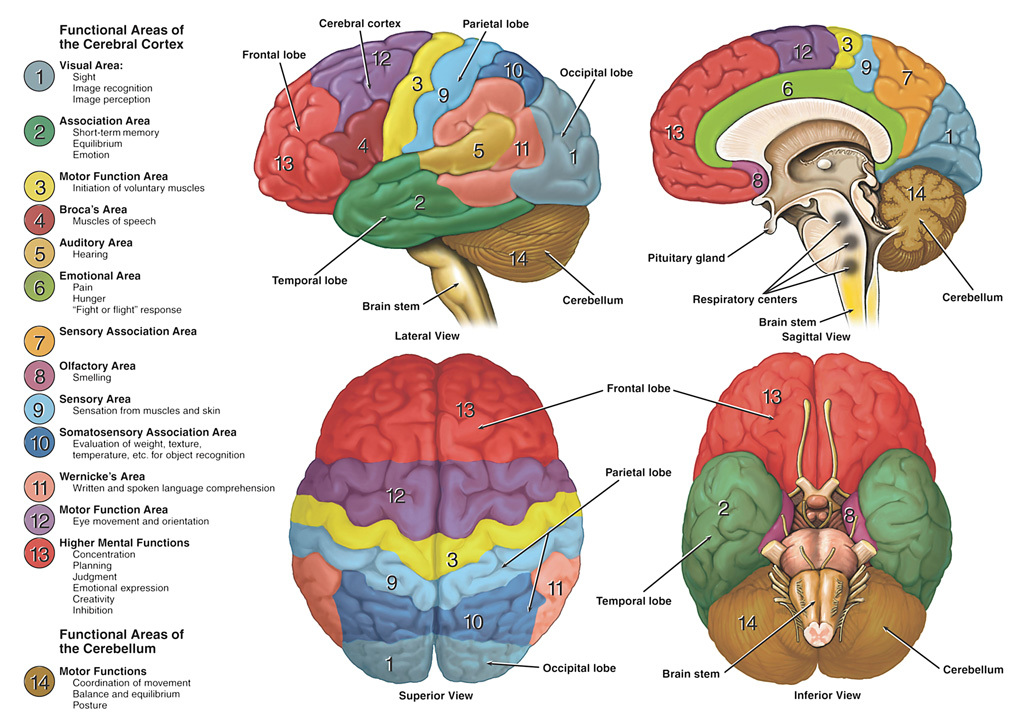
A short time later, during some mandatory training, I learned that you don’t have to get hit in the head or be near a blast to have a traumatic brain injury. Whiplash, like that from a motor vehicle accident, is all it takes. That’s not to say it will happen to everyone, every time. I’m not a doctor. But just learning that it can happen that way, coupled with my symptoms matching, CLICK. I knew before I was officially diagnosed.

Sometime after I recovered from the worst of my mild TBI symptoms, I started noticing pain in my shoulders. As I was medically retiring a year and a half or so later, I was told that it was osteoarthritis, or wear and tear from military service. It seemed like a plausible diagnosis.
In an attempt to cope with the ongoing pain after I left military service, I did a couple of rounds of physical therapy, to no avail. At that point, I just accepted I would have to learn to live with it and work around the pain. That I did, including modifying my exercise routine to accommodate it.
That seemed to work well until late 2015, when I suddenly felt as though someone was tasering me in the back of my head. It is the most painful sensation I have ever experienced, an electric shock-like pain originating from the base of my skull, radiating up into my scalp and my face every couple of seconds.
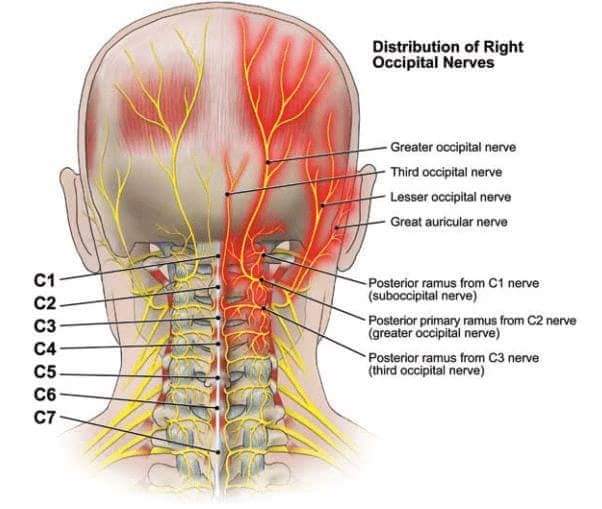
My new diagnosis was occipital neuralgia. This told me I likely have damage to my cervical spine, as the occipital nerves extend down into discs C1-C4. I wouldn’t find out exactly what kind of damage (besides nerve damage) until a few years later.
Now it’s about 9 years since the car accident, in 2020. I am swinging on an overhead horizontal bar, playing with my kids. We were pretending to be monkeys. No lifting or excessive strain, just swinging. Then I heard and felt a “pop,” and pain so intense I thought I broke a bone or dislocated my shoulder. I headed to the ER, with the results being negative for both of those. My primary care doc sends me to physical therapy, which I attended for 8 weeks.
The result was an increase of pain, instead of a decrease. Big surprise there. I’m sure quite a few people in the medical community would be shocked to learn that physical therapy doesn’t fix everything. About 9 months after the acute injury, I was finally sent to obtain an MRI, which showed a healing SLAP tear or a “superior labral tear from anterior to posterior” tear.
When I saw the first orthopedic surgeon, the Dr. Kelly Kirkpatrick, we did oral steroids, cervical spine imaging, and an arthrogram of my shoulder. The cervical spine MRI showed damage that was previously missed. I thought aloud at the appointment, “Wow, I wonder how long that’s been there.” Although problems with the cervical spine and shoulder can be linked, as seen in the image below, it still did not fully explain my situation.
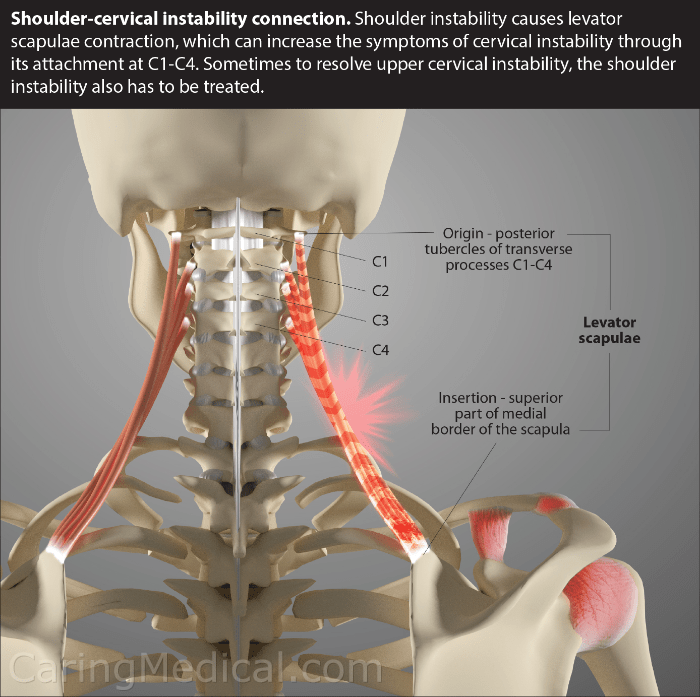
In the end, Dr. K concluded that my cervical spine was not the source of my shoulder pain, and if the SLAP tear was all that was wrong, it should have healed by now with conservative measures. Still, I continued to have intermittent intense pain, and constant aching in between those episodes.
My medical team at that time didn’t gain any further clarity on repeat imaging. Yet my pain continued to worsen any time I used that arm, even for things as light as vacuuming. Eventually, just sleeping on that side was enough to trigger intense pain, two years after that injury. Which, in turn, made getting adequate rest absolute hell.
The last conservative treatment option attempted was a steroid injection. I knew deep down it wouldn’t fix it, but I said what the hell. Better that than rushing into surgery when they aren’t even certain what to fix. When it didn’t “magically fix” my pain, we discussed surgery.
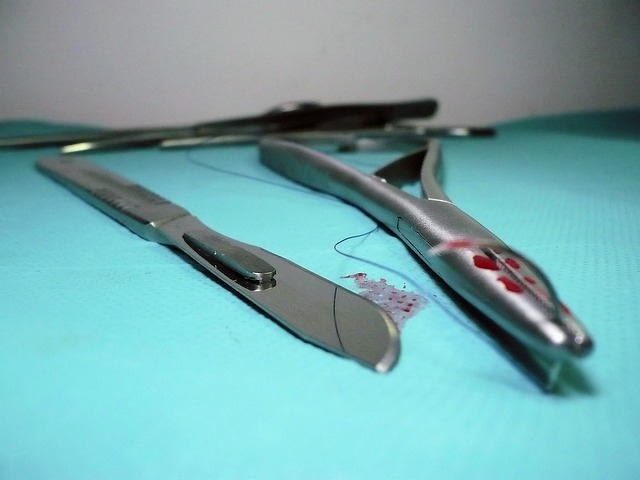
By this point, I didn’t feel afraid of going under the knife, I was simply tired of being in so much pain. This Dr. K suggested a procedure called bicep tenodesis. I chose to research the procedure first to make the most informed decision. I was also about to move out of state, so it just wasn’t possible at the time.
I am so glad that I didn’t agree to that procedure, and that the timeline didn’t work out, because it wouldn’t have fixed the problem. To be honest, I don’t think they had a clear idea as to exactly what the problem was. Not that they didn’t try, they just didn’t have the right expertise.
That is what I found in KY, the land of phenomenal shoulder surgeons, which will be discussed in Chapter Two. Stay tuned, as I cram writing in between physical therapy, family life, and fighting my daily mental war.
Dear reader, thank you for being here. I hope you find my story insightful and inspiring. If you have any questions about my journey in the course of navigating your own or helping a loved one with theirs, please feel free to ask!

 Musecal Mind
I enjoyed reading your piece and it provided me with a lot of value.
LikeLiked by 1 person
I am so glad you enjoyed it! Feel free to indulge in the rest of this series, and I hope it provides you further value!
LikeLike