
scapular dyskinesis · Shoulder Surgery

Shoulder Surgery Chronicles: Chapter 6: Heading Home and The First Few Days of Recovery

Photo by Darrell Gough

Finally free as a bird with one dicked-up wing. “Fly like an eagle…to the sea. Fly like an eagle, let my spirit carry me.” Yeah, right. More like a lyrebird with a bandaged wing. In case you didn’t know, they are very awkward flyers, and thus spend most of their time on the ground. You can read more about them here.

Anyway, on my way home I unfortunately felt every bump, dip, sharp curve, and too-fast braking. However not nearly as awful as it could have been, as my husband happens to be one of the best drivers I’ve ever seen or had the pleasure of riding with. He expertly handled the winding country roads for the last half hour of our trip as gently yet efficiently as he could.

Roads like these always seemed like so much fun to travel on. Truth be told, they absolutely are…just not when you’re in severe pain or nauseous. I still highly recommend taking the “scenic routes” wherever you reside at least once. The experience of driving through beautiful countryside is thrilling, peaceful, and highly enjoyable.

Naturally, the nausea kept coming in waves, though thankfully I did not actually vomit. That would have hurt like a mother effer. The pain on the way home, however, was quite fierce. I found myself wishing they would have sent me home with some one-time use ice packs. I may have to mention that in the patient experience survey.
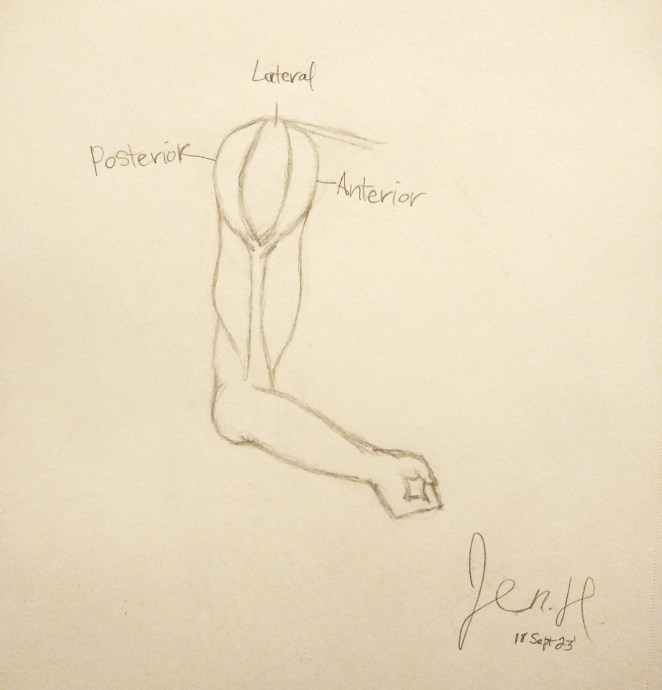
Oddly enough, most of my pain wasn’t at the incision site. Neither was it located at the target area where he worked his magic to mend the musculature in my shoulder blade. Instead, it manifested in the shoulder joint, predominately on the anterior and lateral sides (see above diagram). In those spots, it felt like somebody took a hammer to it, and left a big screwdriver in there.

The rest of the day was difficult, with drifting in and out of sleep, keeping the nausea at bay, and controlling the pain as best as I could. The pain meds, muscle relaxers, and ice packs were my best friends, and the only way I slept at all that night. The nighttime was equally unyielding, sleeping only one to two hours at a time on average.

DAY 2 of RECOVERY:
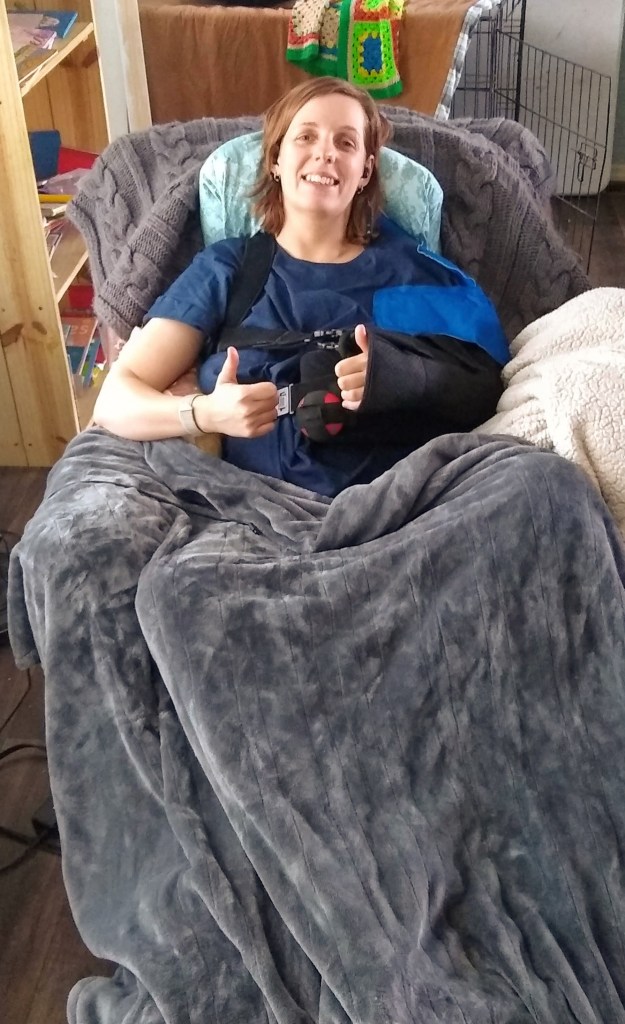
By morning, however, the dark clouds of agony had cleared a little. I felt stiff and sore, despite moving my elbow joint and flexing my hand periodically as I was supposed to. At any rate, I was still significantly better off than I was the day before.

To my pleasant surprise, both a recovery nurse and Dr. Grantham’s Physician Assistant called to check on me today, as well as to provide me further instructions for the days to follow. Even in the throes of the worst of the pain, I still feel that this was the right decision, and I’m glad that I did it. I know it will all be worth it in the end.

If you can’t tell, those pain meds are working wonders right now.

DAY 5 of RECOVERY:

I finally got to take a shower today, YAY! It was challenging and awkward, but I managed. Between a washcloth, a loofah, and a shower chair, mission accomplished. It’s worth mentioning that the shampoo and conditioner bars I switched to a few months ago made washing my hair one-handed remarkably easier than using standard liquid shampoo. Unexpectedly, toweling off afterwards proved more challenging than showering.

It is definitely a strange feeling being stuck at ninety degrees (and lower) range of motion with that arm…somewhere between having a robot arm and a ragdoll arm. Besides that, the whole area is still achy and sore, although much more tolerable than the first few days. I’ve graduated to managing the pain with only NSAIDs, muscle relaxers, and ice at the moment. I’m thankful for that, because I am not a fan of the side effects.

Not to mention the pain in the neck it is to get narcotic pain medications at all (yes even for surgery), much less a refill, thanks to the knee-jerk policies of our government. Meeting at a commonsense middle-ground between sustaining patient care and avoidance of bolstering opioid addiction numbers never quite seems to be within their grasp.
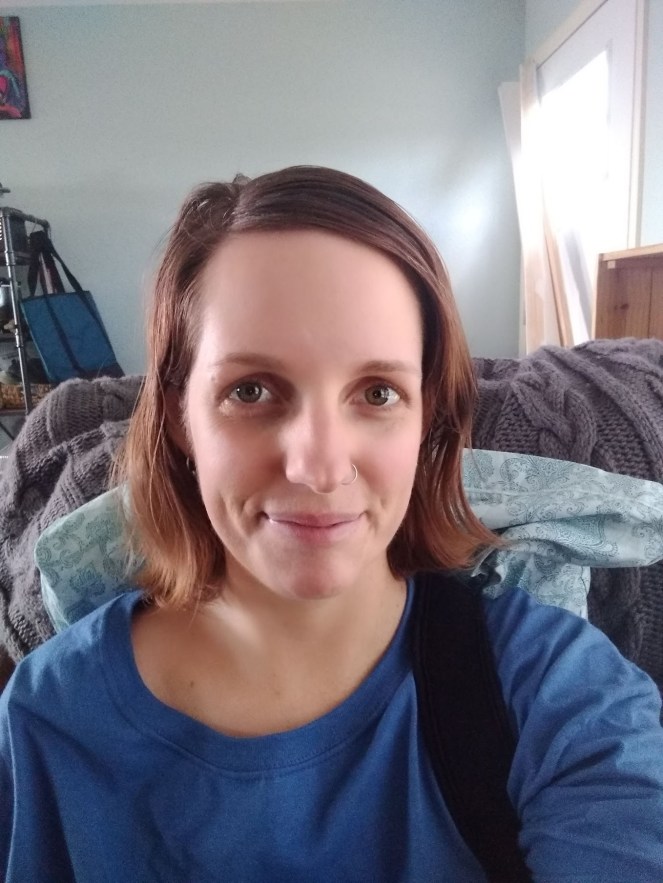
I finally have some color back in my cheeks and I am not so ragged-looking!

It’s like, “Excuse me, I don’t want to take this crap in the first place, but I’m having surgery, and would rather not be in extreme pain waiting for it to be filled. Yes, I am well aware I have not had the surgery yet, but I prefer a proactive approach, rather than having to send my caretaker back out for it when I need them by my side. By handling it myself beforehand, I save us both a great deal of hassle.”

I find having to explain all of that and justify why I need them at all, particularly beforehand, absurd. That is what my doctor is there for, a practicing surgeon. If that doesn’t clue the powers that be in for the need, feel free to call the clinic, who will then tell you that yes, I am indeed scheduled for surgery, and will be in a f*#kload of pain when I wake up. Painstaking as the process of getting these medications filled may be, I know it’s not the pharmacy’s fault. They didn’t make the rules, they are just forced to follow them.

DAY 6 of RECOVERY:  WORST NIGHT OF SLEEP SO FAR…

As was the routine, I felt snuggled up with all the pillows and soft warm blankets, all settled in when I shut off the light, eyes and mind too tired to keep reading. Or so I thought. Then the restless legs began. If you have never experienced that sensation, it’s like a reflex test at the doctor, but in your calves, and constant.

The urge to move your legs is irresistible and involuntary, a feeling like you need to kick something or sprint across the yard. It’s hard to explain but very uncomfortable and definitely not something you want to experience when exhausted and trying to sleep.

At this point, I thought of my friend Brittany, who has early onset Parkinson’s disease. She once described a similar sensation of not being able to stop her legs from involuntarily moving caused by dystonia related to her Parkinson’s. My heart filled with sympathy for her all over again.

With the aid of my handy walking stick, I have been walking daily. Short bursts in the house at first. It’s a healthy distraction from the pain and helps with the boredom. Apparently, experts agree that walking also aids in recovery and helps prevent post-surgical complications such as blood clots.

By day 3 or 4, I was walking outside, increasing the time and distance each day. It was quite tiring in the beginning, but this light exercise definitely sped up my recovery and gave me a much-needed mental health boost. I began looking forward to my daily walks embracing the birdsongs, studying mushrooms I found, the smells and scenery of the forest. I suppose that is one of the best things about living in the middle of nowhere, Kentucky.
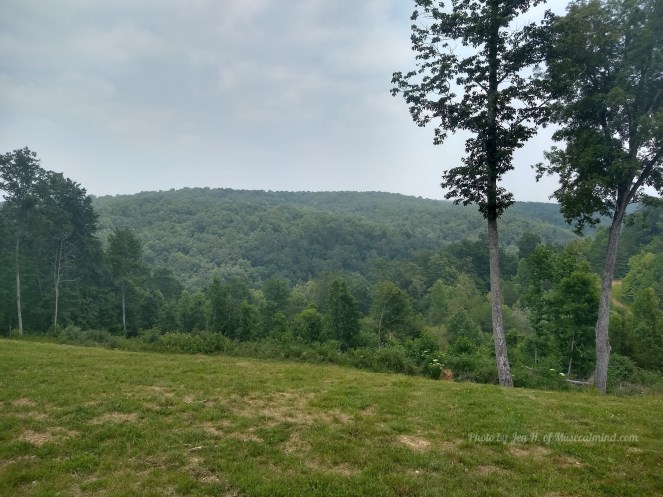
So, I knew the restless legs weren’t occurring due to lack of physical activity. I also ruled out any of the medications I was taking as the root cause. I drink caffeine in moderation, only one mug each morning upon waking. So what gives?

My theory is that my body declared, “I’m not sleeping in that damn chair anymore. And um, hello, did you forget you are not a back sleeper?!” and I was like, “Well ok, but couldn’t you have said something earlier in the evening? Possibly before my husband (and caretaker) went to bed himself, perhaps? Now what the flip are we going to do???”

I tried walking, stretching, massaging, and exercising my restless legs with calf raises. That combination seemed to help so I crawled back in the chair, piled my blankets back on, and tried once again to sleep. Next came the back pain. The muscles in my back suddenly spasmed and the ache was particularly intense around my kidneys and middle back. It’s similar to the cramping that can occur in that area as a result of sleeping for too long of a stretch.

“Not being able to sleep is terrible. You have the misery of having partied all night… without the satisfaction.”

-Lynn Johnston, Canadian Cartoonist

It’s as if your body says, “We’ve slept quite enough, thank you. Here’s some back pain to motivate you to get the hell out of bed, NOW.” Except I hadn’t had any sleep. I wrestled about (gently) for an hour or two more, at which point I felt the urge to get up again. Let’s try the couch, I thought.

Seemed like an easy way to test out if I was ready for side sleeping on the uninjured arm. I didn’t want to be bothering the hubs or moving all 6 pillows, water, and eye mask to the bedroom one-handed, in the dark, without knowing for certain.

Thus, I placed a pillow under my injured arm, one under my head, and threw on a warm sherpa throw blanket (yes it is as lovely as it sounds, you should totes muh-goats get one). Almost instantly after getting situated for my experiment, I passed out into a halfway sleep. A far sight better than previous attempts, I considered this a success.

Around 5 a.m. my husband awoke, and after giving him a brief synopsis of my sleep struggles, I awkwardly climbed into bed. He helped me with the covers, and I was out like a light bulb. I slept a deep, dreamless sleep for about 3 hours.

While 3 hours is certainly not much and a far cry from the recommended 7-9 hours, I felt grateful for those few precious hours over none at all. Besides, I thought, I can always squeeze in a nap today if needed. My only focus right now is healing and listening to my body (and my surgeon’s instructions).

This includes resting when I need to, whether I want to or not. I find that at this point, even when I do achieve a decent night’s sleep, I still need an afternoon siesta. Many times, I conk out hard enough during these naps to reach REM, resulting in some weird, eccentric dreams. That may be partly due to the meditation channel (see below) I’ve been plugging into during those naps, in hopes of preventing my family’s daily noises from disturbing my rest.

I guess I wasn’t expecting this part to be so challenging. I wasn’t prepared for my body to reject the position or location of sleep so early on. Maybe this is a good sign that I am healing well and swiftly. It sucks that I must be in this sling for 36 more days. Yes, I am counting down the days. I have found this to be helpful many a time when traversing something difficult, going through a hard time, or just feeling stuck in life.

Whether that calls for breaking up a tough time into measurable chunks with things to look forward to, or breaking up a long-term goal into smaller ones…I find it is always helpful. In example, the journey to get this shoulder surgery took 3 years of concentrated effort. Being that it was not the only medical puzzle I was trying to solve during those three years, it was hard. But mapping a path forward for reference, made it more bearable.

However, in the throes of recovery, it is also important to celebrate even small wins. For example, I figured out how to button my husband’s jacket over my sling one-handed today! It doesn’t seem like much, but it is a small victory to me. While I understand the necessity of asking for help sometimes, I relish being able to do things for myself.

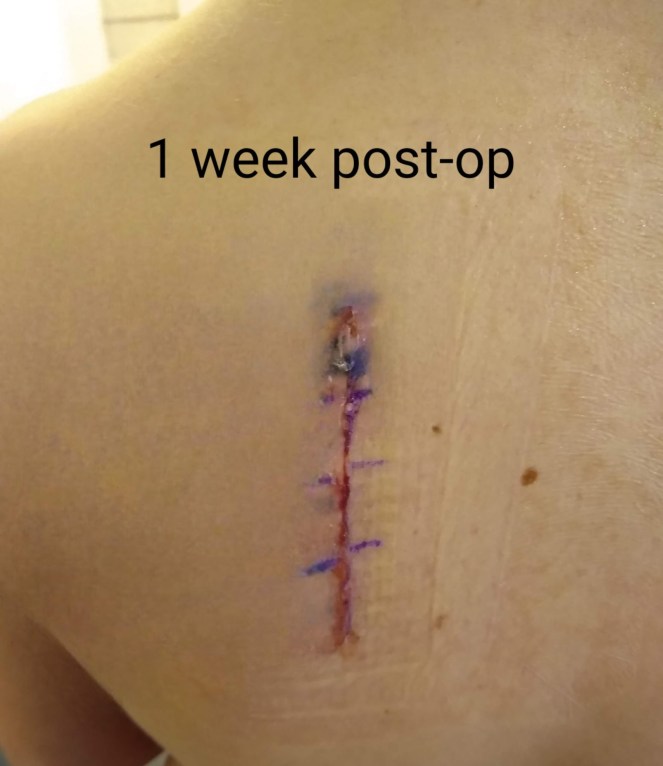
For another small win, I am nearly entirely free of needing pain medication, including the muscle relaxers and ibuprofen. My doctor may still want me on anti-inflammatories for healing purposes, but I’m celebrating hardly needing them for pain anymore! I do not like taking pills. Better still, I have finally made it through the first week of recovery! Here’s a look at how I am healing!

scapular dyskinesis · Shoulder Surgery

Shoulder Surgery Chronicles Chapter 2: Kentucky, The Land of Phenomenal Shoulder Surgeons

After I got settled in Kentucky and got a referral to the second orthopedic surgeon, Dr. Brent Morris, I had renewed hope. This guy came highly recommended by the first surgeon, and from my own research, I could see he was held in high regard by his current and former patients as well. I met with him in late 2022.

I found him to be professional, knowledgeable, experienced, and compassionate. What happened next instantly shattered that renewed hope. Paraphrasing here because I don’t recall word-for-word what he said:

“I’m not the surgeon you need. I can’t help you because you have a rare condition called scapular dyskinesis. That is not my specialty. But I know who to send you to.”

At first, I was angry and heartbroken, and I wanted to break down and cry right there in the exam room. With tears in my eyes, I said to him, “So you can’t help me?” He replied, “No, I’m not the guy you need. Maybe I used to be the guy, but I think this is beyond my level of expertise. But don’t worry because the guy I’m sending you to is the best for this condition.”

In complete shock, I walked out to my car in a daze. I called my husband, and through sniffles and sobs, I told him what happened. It had already been over 2 years when I saw Dr. M that day.

Over two years of failed treatments, countless appointments, a dozen prescriptions, growing limitations, worsening pain and consequently, broken sleep. The pain made it hard not only to fall asleep but also to stay asleep, as I would often wake up in the middle of the night in intense pain.

Photo by M. on Unsplash

Upon reflection, and after many frustrated tears, I realized I respected his honesty and humility. Renewing my resolve, I called the office of Dr. Jeffrey Grantham, the orthopedic surgeon Dr. M referred me to. My heart sank a little when I learned he was not in network with either of my insurances. I knew what that meant…come out of pocket for out-of-network costs, if the insurance company would even authorize me to see him.

Then, as I read the provider notes from Dr.M, I wept once more in gratitude. Based on my experiences, such compassion and diligence for patients is far from the norm. It is a unicorn in the medical world. He wrote: “I believe it is critical this patient sees Dr. G and his team.”

In disbelief, I reread that line twice more. He was trying to help me however he could, even though he wasn’t the one who could fix my shoulder. And that was exactly the pick-me-up I needed to keep fighting.

Image by Tumisu from Pixabay

Did he know of the insurance battle I would likely have to fight to see Dr. G? Or did he merely see the pain and desperation in my eyes when he said he couldn’t fix me? I’ll probably never know, but I am certainly glad such amazing doctors exist. I wouldn’t hesitate to recommend him to people with other shoulder problems.

Let’s ponder that concept for a moment, shall we? If there were more doctors like that, who are willing to go above and beyond for their patients, think how much faster and more efficiently patients could be treated!

If we didn’t have to choose between sinking ourselves in debt for out-of-pocket costs or suffering for years whilst jumping through a crazy amount of insurance hoops…if we could just see the doctors we need to see, right away. What a beautiful, more functional world that would be.

Image by Steve Buissinne from Pixabay

If only we had more physicians that actually care about their patients…the ones who see people and not just dollar signs. If only insurance companies were less ruthless, and covered the actual doctors and treatments that people need and don’t cause further harm. If that were reality, maybe I wouldn’t still be sitting here in pain as I type this, 3 long years later.

On comes the insurance battle. It’s truly sad that it has to be a battle. That on top of dealing with chronic pain and jumping through numerous medical hoops akin to a sick circus act, we must also fight for the treatment we needed all along.

I discovered that my first insurance company would not authorize a referral nor pay a single cent for an out of network provider unless it is for emergency care. The second insurance provider flat-out denied my request to this out-of-network provider, with no option to appeal.

Image by Pexels from Pixabay

Alas, I was back to square one. Sitting and waiting for things to change. Dutifully calling the clinic every week, asking if they are in network with either of my insurances yet. The weeks drag on, as I’m struggling to get through the day in agony.

That meant alternating between indulging in any (healthy) distraction from the pain I can manage, and simply giving in to needing relief from the pain. That meant utilizing every tool at my dispense, to include pain creams, ice packs, heating pads, muscle relaxers, tennis ball massage, numbing agents, a TENS unit, anything but pain pills to take the edge off. At night, I was taking high dose sleeping pills to try to sleep at night. It felt all in vain, but what choice does one have?

FINALLY, in December of 2022, I get a win with my weekly phone call…the clinic has signed a contract with my insurance company to become an in-network provider. I was so happy I cried tears of joy and relief, I shouted, I jumped for joy. I would have done cartwheels across my front yard, if only my shoulder wasn’t effed up.

Image by No-longer-here from Pixabay

After many more calls between this clinic and my insurance company, I learned that the paperwork could take up to three months to be complete, giving them the ability to approve the referral. I thought to myself, I’ve already waited 3 years, what’s 3 more months? Thus, I continued calling week-after-week, hoping the referral process is complete.

Stay tuned for Chapter 3: New Beginnings.

scapular dyskinesis · Shoulder Surgery

Shoulder Surgery Chronicles Chapter 1: The Beginning

In the first chapter of my shoulder surgery chronicles, I am returning to where I reckon this mess began. There’s no way to know with absolute clarity and certainty how I ended up with scapular dyskinesis. However, the extensive research I have done on this condition, coupled with the conversations I have had with my medical team, leads me to believe that this is the most credible account. It is a story spanning 12 years, give or take.

Many years ago, I was living in Washington state. In the summer of 2011, I was in a motor vehicle accident, my first one to be exact. The first accident is often an awful one, and for some reason unbeknownst to me, it seems to occur when the person who is hit is doing everything correctly.

Picture this: you’re doing everything you could and should be doing to be a good driver and avoid accidents…wearing your seatbelt, no distractions, no speeding, driving as safely as possible, etcetera…that, is when chaos intervenes.

It could be an animal, a force of nature, or in my case, another human. This person, fallible and flawed as he was (as we all are), was apparently in a much bigger hurry to reach his destination that morning than I was. I mean who else drives 55 MPH entering a neighborhood, where the posted speed limit is 15 MPH, right? I’m betting it’s the same kind of person who would touch an electric fence on purpose.

Image by David Cardinez from Pixabay

Anyway, thanks to this reckless driver, my car was totaled. Apparently, my odd way of coping with that traumatic experience, and the correlating surge of adrenaline and anxiety, was to channel it into being irritated that he had spilled my coffee.

I remember feeling angry and devastated, as I had only owned that car for a few months. It was my first car, bought with my own hard-earned cash. There’s truly nothing like your first car. It symbolizes concepts so much deeper than simply a mode of transportation. That car was my first true sense of freedom and independence as an adult. I was doing everything correctly, by the book. And it still didn’t fucking matter.

Suddenly, I knew what my grim high school photography teacher meant by “Life’s a bitch, and then you die.” The first part is about the bullcrap that life throws your way when you don’t deserve it, and the second part is about life being short and being glad you’re not dead yet. Well, I thought, at least I still had that.

At any rate, I remember that accident causing whiplash, and my upper body feeling sore. Being young, dumb, and stubborn, I didn’t think much of it at the time. I caught a ride with a coworker and went off to work. However, it wasn’t long before I realized more damage had been done than I originally thought.

When I suddenly started having problems with my balance, equilibrium or inner ear balance, memory, concentration, mood, sleep, and even trouble keeping my eyes open, I knew something was seriously wrong.

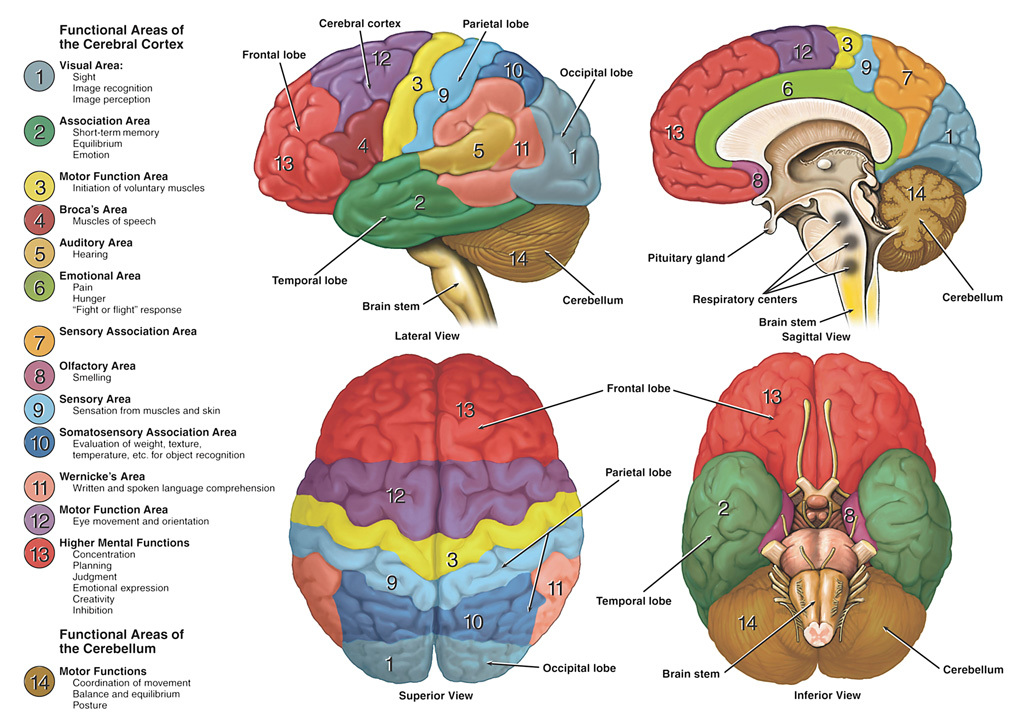
This brain diagram helped clue me in to what the heck was happening to me. Turns out, I had a mild traumatic brain injury. This picture also helped me understand exactly which parts of my brain were damaged in the accident.

A short time later, during some mandatory training, I learned that you don’t have to get hit in the head or be near a blast to have a traumatic brain injury. Whiplash, like that from a motor vehicle accident, is all it takes. That’s not to say it will happen to everyone, every time. I’m not a doctor. But just learning that it can happen that way, coupled with my symptoms matching, CLICK. I knew before I was officially diagnosed.

Image by 0fjd125gk87 from Pixabay

Sometime after I recovered from the worst of my mild TBI symptoms, I started noticing pain in my shoulders. As I was medically retiring a year and a half or so later, I was told that it was osteoarthritis, or wear and tear from military service. It seemed like a plausible diagnosis.

In an attempt to cope with the ongoing pain after I left military service, I did a couple of rounds of physical therapy, to no avail. At that point, I just accepted I would have to learn to live with it and work around the pain. That I did, including modifying my exercise routine to accommodate it.

That seemed to work well until late 2015, when I suddenly felt as though someone was tasering me in the back of my head. It is the most painful sensation I have ever experienced, an electric shock-like pain originating from the base of my skull, radiating up into my scalp and my face every couple of seconds.

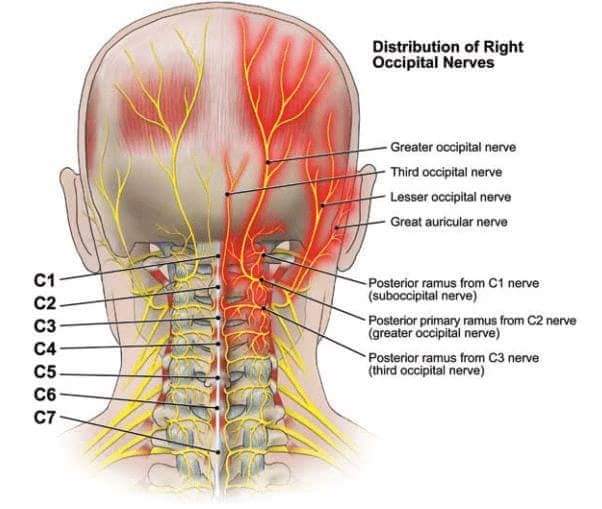
My new diagnosis was occipital neuralgia. This told me I likely have damage to my cervical spine, as the occipital nerves extend down into discs C1-C4. I wouldn’t find out exactly what kind of damage (besides nerve damage) until a few years later.

Now it’s about 9 years since the car accident, in 2020. I am swinging on an overhead horizontal bar, playing with my kids. We were pretending to be monkeys. No lifting or excessive strain, just swinging. Then I heard and felt a “pop,” and pain so intense I thought I broke a bone or dislocated my shoulder. I headed to the ER, with the results being negative for both of those. My primary care doc sends me to physical therapy, which I attended for 8 weeks.

The result was an increase of pain, instead of a decrease. Big surprise there. I’m sure quite a few people in the medical community would be shocked to learn that physical therapy doesn’t fix everything. About 9 months after the acute injury, I was finally sent to obtain an MRI, which showed a healing SLAP tear or a “superior labral tear from anterior to posterior” tear.

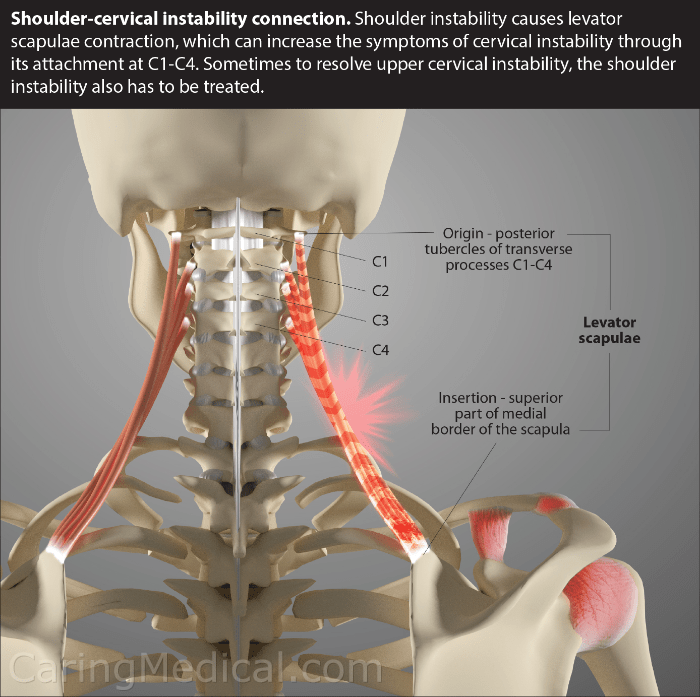
When I saw the first orthopedic surgeon, the Dr. Kelly Kirkpatrick, we did oral steroids, cervical spine imaging, and an arthrogram of my shoulder. The cervical spine MRI showed damage that was previously missed. I thought aloud at the appointment, “Wow, I wonder how long that’s been there.” Although problems with the cervical spine and shoulder can be linked, as seen in the image below, it still did not fully explain my situation.

In the end, Dr. K concluded that my cervical spine was not the source of my shoulder pain, and if the SLAP tear was all that was wrong, it should have healed by now with conservative measures. Still, I continued to have intermittent intense pain, and constant aching in between those episodes.

My medical team at that time didn’t gain any further clarity on repeat imaging. Yet my pain continued to worsen any time I used that arm, even for things as light as vacuuming. Eventually, just sleeping on that side was enough to trigger intense pain, two years after that injury. Which, in turn, made getting adequate rest absolute hell.

The last conservative treatment option attempted was a steroid injection. I knew deep down it wouldn’t fix it, but I said what the hell. Better that than rushing into surgery when they aren’t even certain what to fix. When it didn’t “magically fix” my pain, we discussed surgery.

Image by Dominik Karch from Pixabay

By this point, I didn’t feel afraid of going under the knife, I was simply tired of being in so much pain. This Dr. K suggested a procedure called bicep tenodesis. I chose to research the procedure first to make the most informed decision. I was also about to move out of state, so it just wasn’t possible at the time.

I am so glad that I didn’t agree to that procedure, and that the timeline didn’t work out, because it wouldn’t have fixed the problem. To be honest, I don’t think they had a clear idea as to exactly what the problem was. Not that they didn’t try, they just didn’t have the right expertise.

That is what I found in KY, the land of phenomenal shoulder surgeons, which will be discussed in Chapter Two. Stay tuned, as I cram writing in between physical therapy, family life, and fighting my daily mental war.

Dear reader, thank you for being here. I hope you find my story insightful and inspiring. If you have any questions about my journey in the course of navigating your own or helping a loved one with theirs, please feel free to ask!

scapular dyskinesis · Shoulder Surgery

Hello! I Now have a 6-inch Scar to Talk About

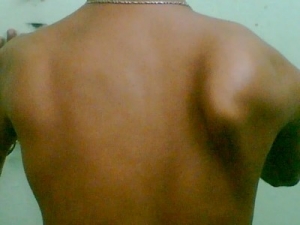
Disturbing photo, isn’t it? That’s what my shoulder used to do.

Remember when I said my chronic conditions kick my butt for a couple of weeks now and then? Well, this time it was my shoulder. The good news is that it wasn’t the usual excruciating pain I became accustomed to living with, but surgery recovery instead.

Yes! I finally beat the system; I WON the healthcare lottery. I received the surgery on my shoulder I have been needing badly for 3+ YEARS, by way of THE best expert surgeon for this injury. Words cannot express how blessed and relieved I feel that that part is over. At any rate, this particular affliction is called Scapular Dyskinesis, and you can read more about that here.

I wish I had asked my surgeon to take a before photo during the exam so I could show you what my situation looked like. I can assure you it was similar to the above picture, and equally unsettling in appearance, if not worse. I suppose I was focused solely on being heard, and wondering if my time was being wasted again (yay western medicine…). It wasn’t. I finally found the right clinic, and the right doc to fix my shoulder.

Many sources I came across during my research insist that physical therapy is the answer for this injury. Not always…it depends on the cause, and the extent and type of damage. I respect medical professionals that try to keep their patients out of the operating room, because surgery is invasive and complicated, and the recovery really sucks. The truth is, though, many cases require surgery, particularly ones with muscle detachment. If your muscles are detached, no amount of physical therapy will take until you get them reattached.

I know this from experience. We’re talking years of increasing pain, dysfunction, accumulating secondary conditions like occipital neuralgia, and eventually, secondary injuries such as labral tears. All of that suffering despite several attempts at conservative treatments. In the end, it took the right pair of eyes, and the right expertise, to finally heal correctly.

Anyway, I’m about eight weeks post-op, with my minor surgical complications resolved and physical therapy well underway, I finally feel able to return to writing. This topic will be my focus for a while, which will be broken up into weekly segments, as it is a long story. All the same, it is an account worth telling, not only for myself, but also in the off-chance of helping someone else.