This will be my last installment of the shoulder surgery chronicles, though I may add photos of the surgery scar healing process at one year. I know that the scar it would leave was one of the things I initially fretted about before the surgery. Anyway, I’m six and a half months in and doing well. Physical therapy is clicking along, I can do a lot of things without pain that I was no longer able to do before surgery. The best part is, it no longer hurts all the time!
Nowadays in physical therapy, we are focusing on gentle strengthening. The goal is to work my way back into weightlifting and calisthenics, or body weight training. Modifications will be necessary, and there are a few exercises my medical team has suggested wouldn’t be wise to do again. These include pullups/chin-ups, rock climbing, and activities that put excessive strain on the scapular muscle group.
The only exercise I feel I am really going to miss, is the chin-ups and pullups. I have always considered that to be the pinnacle of my physical fitness. To do these correctly and unsupported, especially as a female, takes a lot of upper body strength and endurance, which means a lot of training. However, I sustain my gratitude for what I have gained back, and what I have yet to achieve.
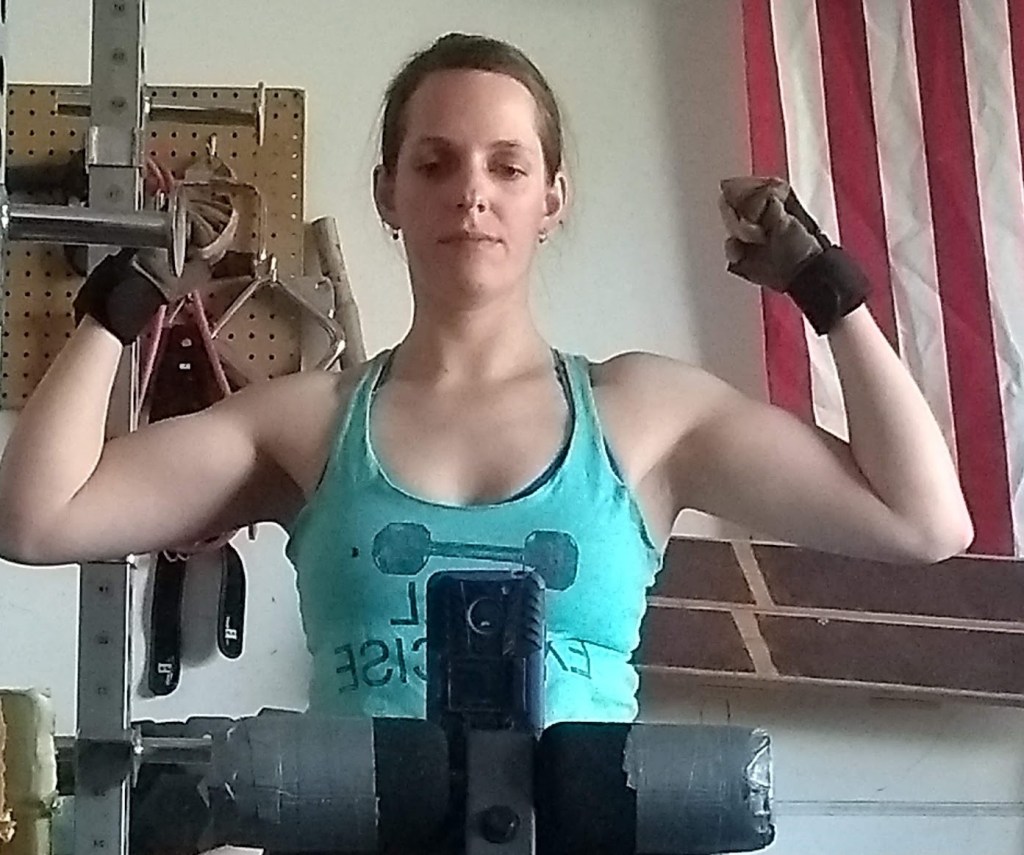
This is me 5 years ago…and my next goal is to reach that level of fitness again.
In conclusion, I have to thank my surgeon, Dr. Jeffrey Grantham, for being the one to finally fix my shoulder properly. Next, my Physical therapist Will, who took great care of me in the first part of my physical therapy journey.
From keeping a watchful eye on my minor surgery complication, to being my cheerleader whilst making sure I wasn’t overdoing it with exercises. He always had encouraging words when I felt discouraged from a setback, or when I felt impatient with my (slower than I’d like) progress.
Last but certainly not least, my beautiful family for their understanding, patience, and unconditional love. My dear husband was an excellent home care nurse and my main support. Thank you for always having ice packs at the ready, frequently helping adjust my mountain of pillows, joining me for my walks in the woods, and so much more.
Thank you all so much, for playing a vital part in changing my life for the better. I am eternally grateful.
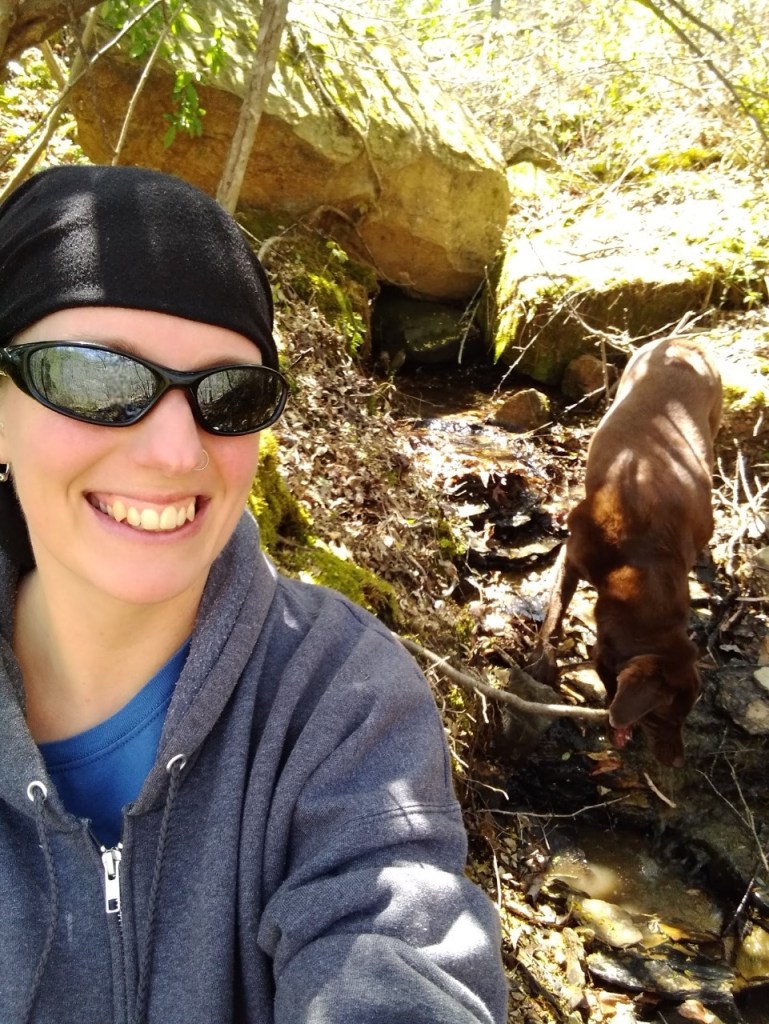
Happily hiking with my dog! Can’t keep a Labrador out of water lol.
Do you have a shoulder surgery recovery story to tell? I invite you to share it! Especially if it involves the condition of scapular dyskinesis. It is supposedly a rare condition, which means our stories are hard to find. Feel free to share any surgery recovery tips, how you are doing now, or adaptations and workarounds you have discovered in pursuit of a healthy, fulfilling life. Anything you feel comfortable sharing as it pertains to the topic.
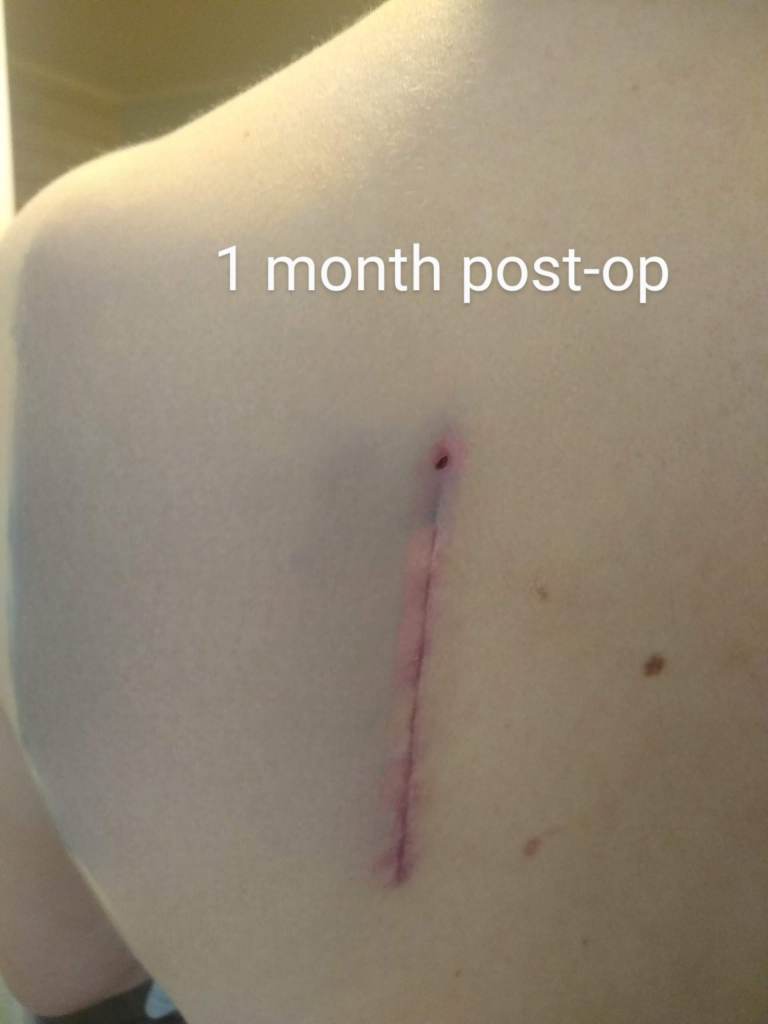
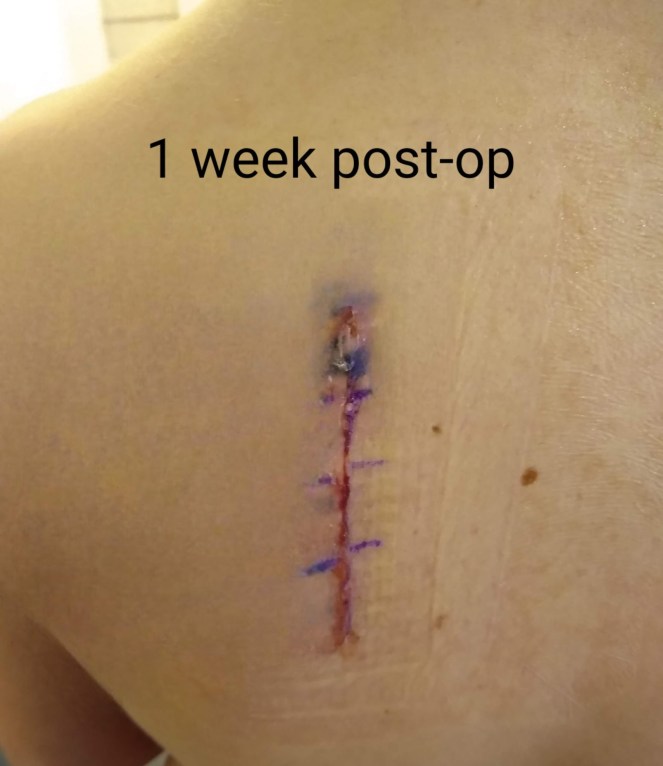
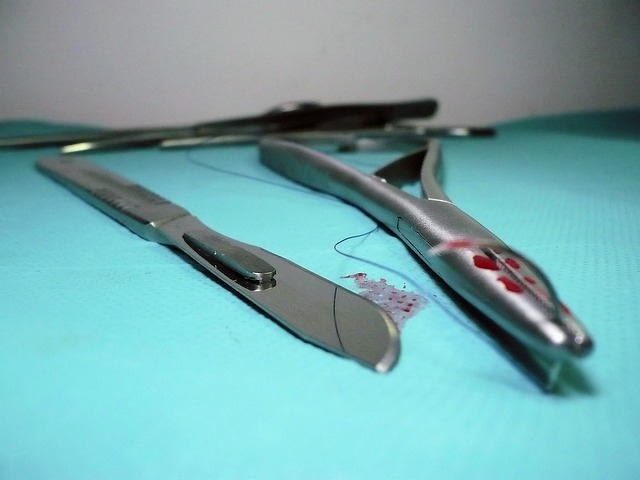
After sorting out a “rejected stitch” complication, everything is healing up nicely. (That’s what left that hole at that top in the above photo.) My surgeon said I could gradually start doing more and more things but did not elaborate on exactly what that meant. I assume he trusts his physical therapist to tell me what that means.
It’s refreshing to see two professionals working together so well, holding so much faith and trust in each other that they stay in their own lane and don’t step on each other ‘s toes. Four weeks in, I still feel I’m in the most capable hands I could possibly be in. I feel blessed and fortuitous for that.
I received a much-needed mood boost via a small taste of freedom this past weekend (4/22-4/23), when I learned I could drive my tractor with one arm without pain. Of course, I wasn’t doing anything crazy such as trying to go up and down steep hills or anything.
Even though I didn’t get to leave my front yard, it felt incredible to not only feel useful and productive, but also to be driving myself around for the first time in weeks. There’s really nothing like the smell of fresh cut grass, a sense of pride from a job well done, and above all, the gratifying independence.
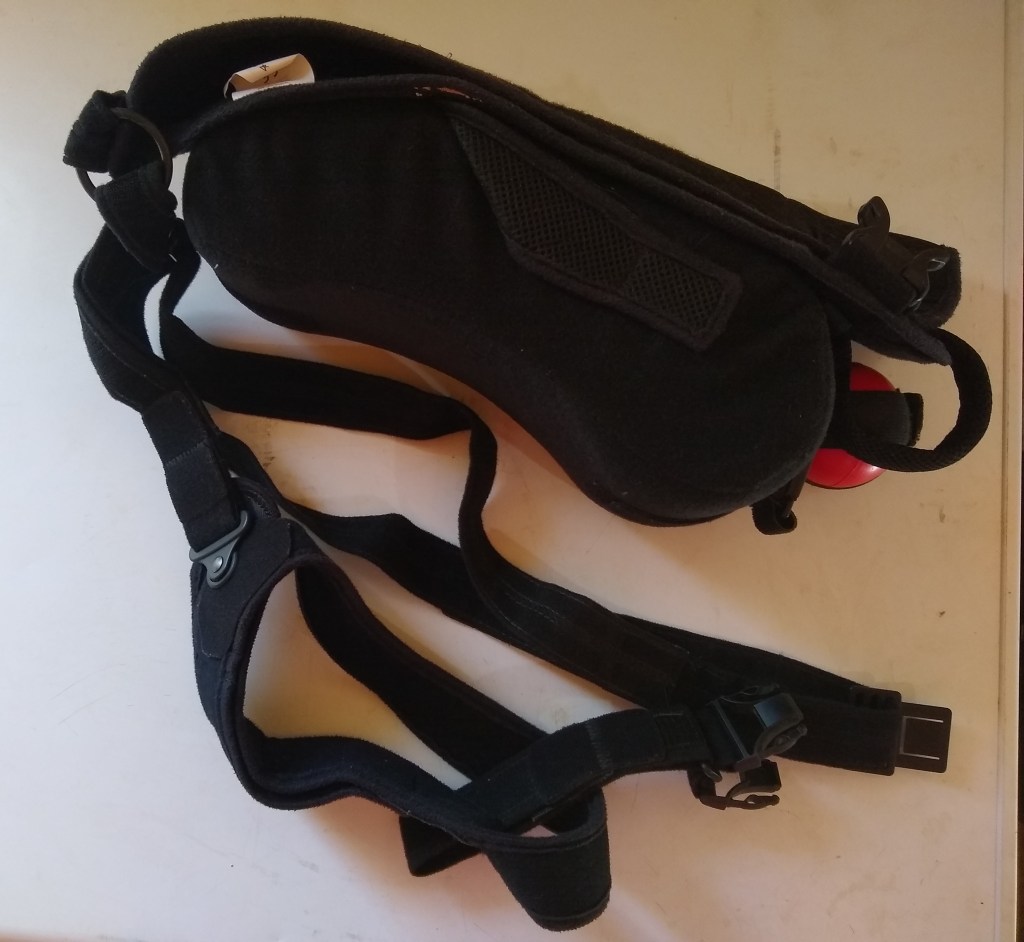
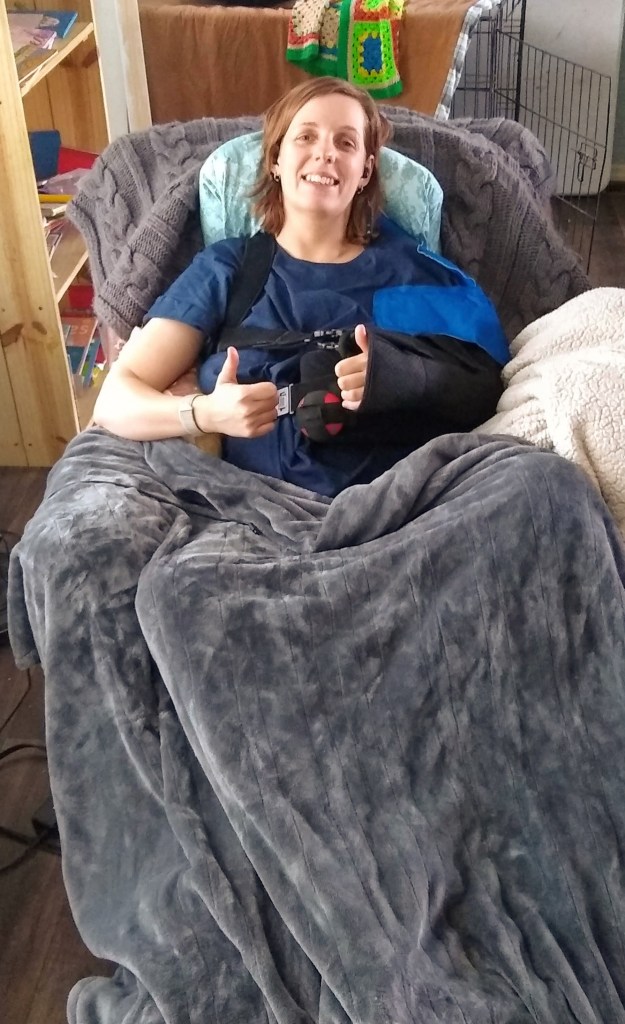
The “Aramapillow.” I will not miss you at all.
Soon, I will be transitioning out of my sling, which I have dubbed “Armapillow.” The name may be a bit cheesy, but when you’re limited on what you can do or where you can go, you tend to get creative in finding ways to entertain yourself and keep your spirits up.
Additionally, I am very much looking forward to being able to sleep without my armapillow, which my medical team said the soonest is generally 8 weeks. Consequently, it’s a long two months to get through before resuming a mild sense of normalcy.
Still, without a doubt I am glad I agreed to this surgery. Even with the aches and soreness that my physical therapy exercises occasionally bring, this is the absolute best my shoulder has felt in over a decade. I have absolutely zero regrets.
I’m 10 days into my recovery, and I never thought that mental anguish would be the hardest part of this journey. I am happy to say I no longer need pain medications, just muscle relaxers. Besides that, I am bored out of my freaking mind. As the saying goes, a stagnant mind is the devil’s playground…the boredom is really starting to bum me out, leaning toward depression.
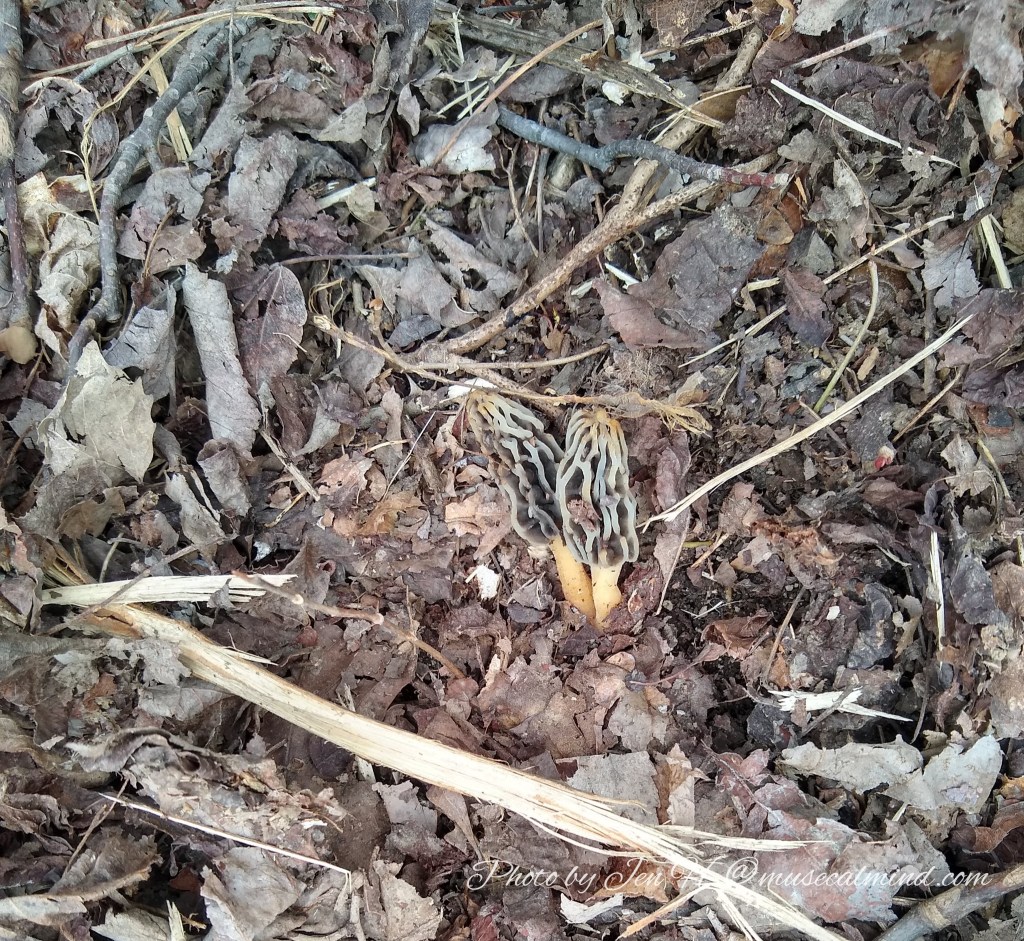
I’m still walking daily, more than once a day if I can manage it. I’m embracing my turtle pace, taking time to observe the wildlife, identifying trees and plants, and mushroom hunting. Kentucky is rich in chanterelles, jack-o-lanterns, turkey tail, morels, and a host of other varieties.
I found my first morel in Kentucky! This really made my day.
Typing one-handed is made easier with the assistance of talk-to-text, during the brief periods when I’m alone in peace and quiet. I also think about all the things I’m looking forward to getting back to doing after my shoulder is healed. Keeping a lighthearted, positive mindset is getting harder as the days drag on. I’m running low on things to do with one arm in a sling for 6 weeks.
I talk to family and friends when they have time. However, the feeling that you are standing still while the rest of the world marches on, is tough. Generally speaking, I’m the kind of person who likes to stay busy and/or productive, so being still (and slow) for this long is a challenge for me.
Whenever I try to help my dear husband with things around the house, I mostly just seem to get in the way. He’s got all these projects that he needs or wants to get done and not being able to help him with most of it sucks. It’s infuriating because I would love to, especially with the outside projects. I enjoy working outside.
With spring now coming into full swing, I’m watching the world around me come back to life, other people going places and doing things, while I feel stagnant. I know that’s not true. I know my body is doing some very important work right now and I must be patient to allow it to happen.
I know this “crawling” is a very important and necessary step. I have to say, though, Tom Petty worded it best: “You take it on faith, you take it to the heart, the waiting is the hardest part.” Rest in peace, you legendary musician.
Now we’re on day 12, the day of my 2-week post-op follow-up appointments, first with Dr. Grantham. During our visit, he noted that my incision looked really good, and is healing beautifully. During light palpation of the area, he said “the fact that I wasn’t hyper-sensitive was a very good sign, as well as the fact that I noticed a significant difference in my shoulder and arm now feeling attached, and no longer an alien extremity.”
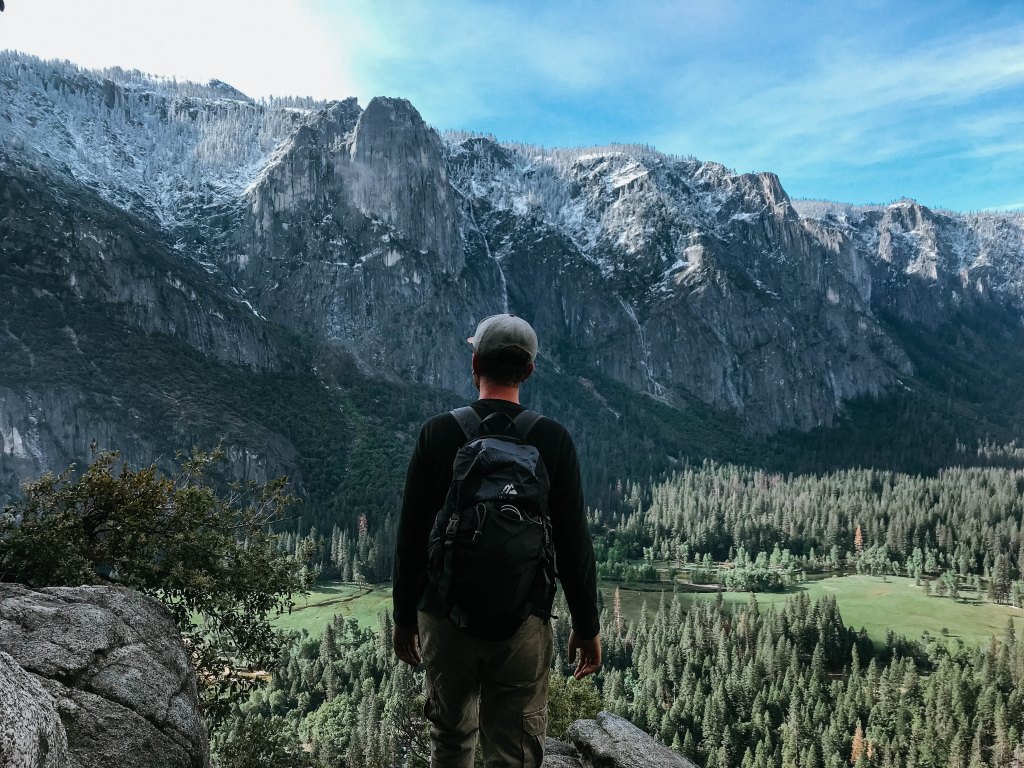
Photo by Alora Griffiths on Unsplash. What an inspiration! I can’t wait to feel like this again!
Doctor G then showed me a surgery picture, pointing out what the detached muscles looked like. Next, a short video clip showing that he could tug on the detached muscles and the scapular bone would not move at all. Which is definitely not normal, and probably one of the craziest real-life things I have ever seen. Sadly, I was not able to a copy of these images or video.
He pointed out the yellow parts that indicated scar tissue where my body had tried to heal the injury on its own. Seeing that I was absolutely enthralled instead of passing out, Dr. G continued by explaining the repair in vivid detail, pointing to where he had drilled holes in the bone, and passed sutures through the muscle and then through the bone.
I was the sewing project.
It reminded me of sewing together layers of fabric in an intermediate sewing project. It’s fascinating but wild at the same time because these are my insides, not a sewing project. I was the sewing project. That’s something I never thought I would say in my lifetime.
I got cleared to start testing out if I can sleep in my bed on my opposite side. At this point, this is really my only difficulty…sleeping well. My body knows I am not a back sleeper, and has alerted me to this discrepancy by waking me up at 3-3:30 a.m. every morning with restless legs or back/hip cramps, etc. When I am finally able to fall asleep, that is my consolation prize.
Photo by Matthew Henry on Unsplash Aww….it’s a pug in a blanket! So cute and so funny!
Anyway, Dr. G said the hand swelling should disperse and go away in the next couple of weeks as I begin moving the arm with gentle PT exercises. This is wonderful news for me, as I have not been able to get my wedding ring back on. I grow weary of my tingly sausage fingers.
I discussed with him my wishes to share the knowledge of this condition with others. This is including the original treating physician, whom was unable to solve the puzzle due to a lack of knowledge of the condition. He graciously printed off my post-op notes for me, as well as an article from the original scapular dyskinesis case with his predecessor. I’ll have to upload that at some point, for anyone who is interested.
“We let the shoulder come to us, we don’t push the shoulder.”
-Will
Next, I met with my physical therapist Will, who inquired about my pain level, which to his surprise, was a zero. Though a little dismayed to hear I had another 4-6 wks in the sling, I’m glad the worst part is over. I was also relieved to hear that the foundation of the physical therapy program is as follows, “we let the shoulder come to us, we don’t push the shoulder.”
The progression of exercises includes markers for range of motion, first without resistance, then with it. Ability to (without pain) slide my arm forward on the table, then raise my arm to shoulder level, then slide it up the wall to a full extension. The process will take at least 6.5 months. Apparently weirdos like me who come out of the operation with no pain at the 2 week assessment do really well with rehabilitation.
Paraphrasing here as to what Will told me: “There will be about 3-4 times where you’re going to feel like you’ve re-torn it, in line with each progression. I can assure you that is not the case, aside from something traumatic happening like falling on the arm. At the 9-12 month mark, you may get that feeling again because we tend to fall out of practice and old (incorrect) muscle habits die hard. You will probably need a PT refresher at that point.”
“It’s about the journey, not just the destination.”
-Unknown, probably someone wiser and more patient than I.
He cautioned me not to push myself, as he has noted that the people that do that have more episodes of pain where they feel as though they have re-torn it. My PT also said there might be days where I’m too sore to do anything and that’s totally fine, and I should listen to my body. We discussed the exercises, and he explained the issues/surgery from his perspective, even whipping out an anatomy and physiology textbook.
I have a feeling he loves it when he gets to whip out that book lol. Though I can’t say I blame him one bit. I’m a bit of a science and medicine nerd myself. I find it fascinating and have been known to watch surgery videos and study grotesque surgery pictures.
Final Thoughts for the Day:
I am still in awe that my shoulder pain is at a ZERO. This is seriously the best my shoulder has felt in YEARS. Not just during the 3-year intense pain period, nor am I referencing only the part of my shoulder that was repaired. Rather, my whole shoulder has not felt this good since 2011, when I first began having pain in my shoulder.
I am so relieved and overjoyed I could cry, dance, and shout at the same time. I know I have a long way to go to get back to 100% (or as close approximation as I can get to 100%), but I am so happy that this part is over. I am repaired, properly, and ready for the next step.
I will gladly do whatever it takes to get there, whilst daydreaming about lifting again. About being strong and capable again. About not constantly being in pain every time I use my arm again. About once more doing all the shoulder-dependent hobbies I enjoyed and haven’t been able to do for a long time.
Furthermore, I plan to get the word out about this condition. This is knowledge that more medical professionals in the orthopedic surgery and physical therapy realms need to know. Not to mention, similarly afflicted people need to know, and know how to get it fixed the right way the first time. Besides keeping me sane, this is why I am chronicling my journey.
I sincerely hope it helps other people, present and future, in navigating their own journeys to proper healing. I hope it helps physicians trying to figure out this puzzle for their patients, as well as physical therapists helping them bounce back after repair. Stay tuned for the next chapter!
Finally free as a bird with one dicked-up wing. “Fly like an eagle…to the sea. Fly like an eagle, let my spirit carry me.” Yeah, right. More like a lyrebird with a bandaged wing. In case you didn’t know, they are very awkward flyers, and thus spend most of their time on the ground. You can read more about them here.
Anyway, on my way home I unfortunately felt every bump, dip, sharp curve, and too-fast braking. However not nearly as awful as it could have been, as my husband happens to be one of the best drivers I’ve ever seen or had the pleasure of riding with. He expertly handled the winding country roads for the last half hour of our trip as gently yet efficiently as he could.
Roads like these always seemed like so much fun to travel on. Truth be told, they absolutely are…just not when you’re in severe pain or nauseous. I still highly recommend taking the “scenic routes” wherever you reside at least once. The experience of driving through beautiful countryside is thrilling, peaceful, and highly enjoyable.
Naturally, the nausea kept coming in waves, though thankfully I did not actually vomit. That would have hurt like a mother effer. The pain on the way home, however, was quite fierce. I found myself wishing they would have sent me home with some one-time use ice packs. I may have to mention that in the patient experience survey.
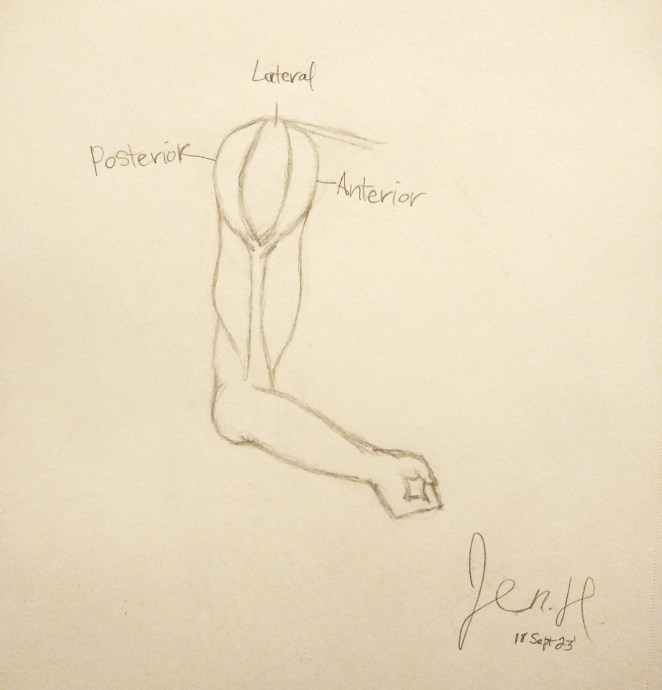
Oddly enough, most of my pain wasn’t at the incision site. Neither was it located at the target area where he worked his magic to mend the musculature in my shoulder blade. Instead, it manifested in the shoulder joint, predominately on the anterior and lateral sides (see above diagram). In those spots, it felt like somebody took a hammer to it, and left a big screwdriver in there.
The rest of the day was difficult, with drifting in and out of sleep, keeping the nausea at bay, and controlling the pain as best as I could. The pain meds, muscle relaxers, and ice packs were my best friends, and the only way I slept at all that night. The nighttime was equally unyielding, sleeping only one to two hours at a time on average.
DAY 2 of RECOVERY:
By morning, however, the dark clouds of agony had cleared a little. I felt stiff and sore, despite moving my elbow joint and flexing my hand periodically as I was supposed to. At any rate, I was still significantly better off than I was the day before.
To my pleasant surprise, both a recovery nurse and Dr. Grantham’s Physician Assistant called to check on me today, as well as to provide me further instructions for the days to follow. Even in the throes of the worst of the pain, I still feel that this was the right decision, and I’m glad that I did it. I know it will all be worth it in the end.
If you can’t tell, those pain meds are working wonders right now.
DAY 5 of RECOVERY:
I finally got to take a shower today, YAY! It was challenging and awkward, but I managed. Between a washcloth, a loofah, and a shower chair, mission accomplished. It’s worth mentioning that the shampoo and conditioner bars I switched to a few months ago made washing my hair one-handed remarkably easier than using standard liquid shampoo. Unexpectedly, toweling off afterwards proved more challenging than showering.
It is definitely a strange feeling being stuck at ninety degrees (and lower) range of motion with that arm…somewhere between having a robot arm and a ragdoll arm. Besides that, the whole area is still achy and sore, although much more tolerable than the first few days. I’ve graduated to managing the pain with only NSAIDs, muscle relaxers, and ice at the moment. I’m thankful for that, because I am not a fan of the side effects.
Not to mention the pain in the neck it is to get narcotic pain medications at all (yes even for surgery), much less a refill, thanks to the knee-jerk policies of our government. Meeting at a commonsense middle-ground between sustaining patient care and avoidance of bolstering opioid addiction numbers never quite seems to be within their grasp.
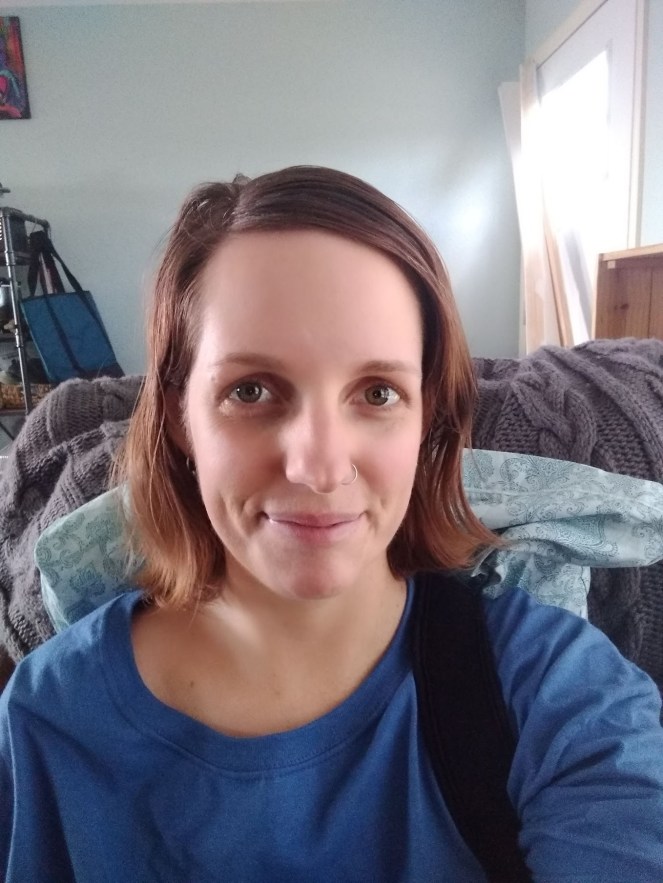
I finally have some color back in my cheeks and I am not so ragged-looking!
It’s like, “Excuse me, I don’t want to take this crap in the first place, but I’m having surgery, and would rather not be in extreme pain waiting for it to be filled. Yes, I am well aware I have not had the surgery yet, but I prefer a proactive approach, rather than having to send my caretaker back out for it when I need them by my side. By handling it myself beforehand, I save us both a great deal of hassle.”
I find having to explain all of that and justify why I need them at all, particularly beforehand, absurd. That is what my doctor is there for, a practicing surgeon. If that doesn’t clue the powers that be in for the need, feel free to call the clinic, who will then tell you that yes, I am indeed scheduled for surgery, and will be in a f*#kload of pain when I wake up. Painstaking as the process of getting these medications filled may be, I know it’s not the pharmacy’s fault. They didn’t make the rules, they are just forced to follow them.
DAY 6 of RECOVERY: WORST NIGHT OF SLEEP SO FAR…
As was the routine, I felt snuggled up with all the pillows and soft warm blankets, all settled in when I shut off the light, eyes and mind too tired to keep reading. Or so I thought. Then the restless legs began. If you have never experienced that sensation, it’s like a reflex test at the doctor, but in your calves, and constant.
The urge to move your legs is irresistible and involuntary, a feeling like you need to kick something or sprint across the yard. It’s hard to explain but very uncomfortable and definitely not something you want to experience when exhausted and trying to sleep.
At this point, I thought of my friend Brittany, who has early onset Parkinson’s disease. She once described a similar sensation of not being able to stop her legs from involuntarily moving caused by dystonia related to her Parkinson’s. My heart filled with sympathy for her all over again.
With the aid of my handy walking stick, I have been walking daily. Short bursts in the house at first. It’s a healthy distraction from the pain and helps with the boredom. Apparently, experts agree that walking also aids in recovery and helps prevent post-surgical complications such as blood clots.
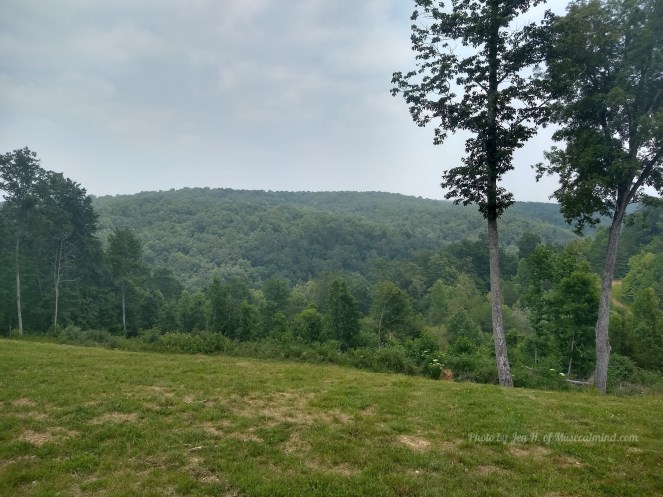
By day 3 or 4, I was walking outside, increasing the time and distance each day. It was quite tiring in the beginning, but this light exercise definitely sped up my recovery and gave me a much-needed mental health boost. I began looking forward to my daily walks embracing the birdsongs, studying mushrooms I found, the smells and scenery of the forest. I suppose that is one of the best things about living in the middle of nowhere, Kentucky.
So, I knew the restless legs weren’t occurring due to lack of physical activity. I also ruled out any of the medications I was taking as the root cause. I drink caffeine in moderation, only one mug each morning upon waking. So what gives?
My theory is that my body declared, “I’m not sleeping in that damn chair anymore. And um, hello, did you forget you are not a back sleeper?!” and I was like, “Well ok, but couldn’t you have said something earlier in the evening? Possibly before my husband (and caretaker) went to bed himself, perhaps? Now what the flip are we going to do???”
I tried walking, stretching, massaging, and exercising my restless legs with calf raises. That combination seemed to help so I crawled back in the chair, piled my blankets back on, and tried once again to sleep. Next came the back pain. The muscles in my back suddenly spasmed and the ache was particularly intense around my kidneys and middle back. It’s similar to the cramping that can occur in that area as a result of sleeping for too long of a stretch.
“Not being able to sleep is terrible. You have the misery of having partied all night… without the satisfaction.”
-Lynn Johnston, Canadian Cartoonist
It’s as if your body says, “We’ve slept quite enough, thank you. Here’s some back pain to motivate you to get the hell out of bed, NOW.” Except I hadn’t had any sleep. I wrestled about (gently) for an hour or two more, at which point I felt the urge to get up again. Let’s try the couch, I thought.
Seemed like an easy way to test out if I was ready for side sleeping on the uninjured arm. I didn’t want to be bothering the hubs or moving all 6 pillows, water, and eye mask to the bedroom one-handed, in the dark, without knowing for certain.
Thus, I placed a pillow under my injured arm, one under my head, and threw on a warm sherpa throw blanket (yes it is as lovely as it sounds, you should totes muh-goats get one). Almost instantly after getting situated for my experiment, I passed out into a halfway sleep. A far sight better than previous attempts, I considered this a success.
Around 5 a.m. my husband awoke, and after giving him a brief synopsis of my sleep struggles, I awkwardly climbed into bed. He helped me with the covers, and I was out like a light bulb. I slept a deep, dreamless sleep for about 3 hours.
While 3 hours is certainly not much and a far cry from the recommended 7-9 hours, I felt grateful for those few precious hours over none at all. Besides, I thought, I can always squeeze in a nap today if needed. My only focus right now is healing and listening to my body (and my surgeon’s instructions).
This includes resting when I need to, whether I want to or not. I find that at this point, even when I do achieve a decent night’s sleep, I still need an afternoon siesta. Many times, I conk out hard enough during these naps to reach REM, resulting in some weird, eccentric dreams. That may be partly due to the meditation channel (see below) I’ve been plugging into during those naps, in hopes of preventing my family’s daily noises from disturbing my rest.
I guess I wasn’t expecting this part to be so challenging. I wasn’t prepared for my body to reject the position or location of sleep so early on. Maybe this is a good sign that I am healing well and swiftly. It sucks that I must be in this sling for 36 more days. Yes, I am counting down the days. I have found this to be helpful many a time when traversing something difficult, going through a hard time, or just feeling stuck in life.
Whether that calls for breaking up a tough time into measurable chunks with things to look forward to, or breaking up a long-term goal into smaller ones…I find it is always helpful. In example, the journey to get this shoulder surgery took 3 yearsof concentrated effort. Being that it was not the only medical puzzle I was trying to solve during those three years, it was hard. But mapping a path forward for reference, made it more bearable.
However, in the throes of recovery, it is also important to celebrate even small wins. For example, I figured out how to button my husband’s jacket over my sling one-handed today! It doesn’t seem like much, but it is a small victory to me. While I understand the necessity of asking for help sometimes, I relish being able to do things for myself.
For another small win, I am nearly entirely free of needing pain medication, including the muscle relaxers and ibuprofen. My doctor may still want me on anti-inflammatories for healing purposes, but I’m celebrating hardly needing them for pain anymore! I do not like taking pills. Better still, I have finally made it through the first week of recovery! Here’s a look at how I am healing!
As my husband and I are driving to the surgery center, I am brimming with anxious optimism. I know that today is going to change my life. It’s a funny feeling, as though these past three years I’ve been waiting for my life to begin anew. Glum as it may sound, all I could do until now was survive. Keep fighting for answers and the quality of life I deserve. Relish the fleeting moments of happiness wherever I find them…just hold on.
My husband’s idea of support, LOL.
Do the legwork, work through the emotional turmoil of that process, endure each disappointment. Continue putting one foot in front of the other. My stubborn refusal to give up, and the steps I have taken the past three years has led me to this victory.
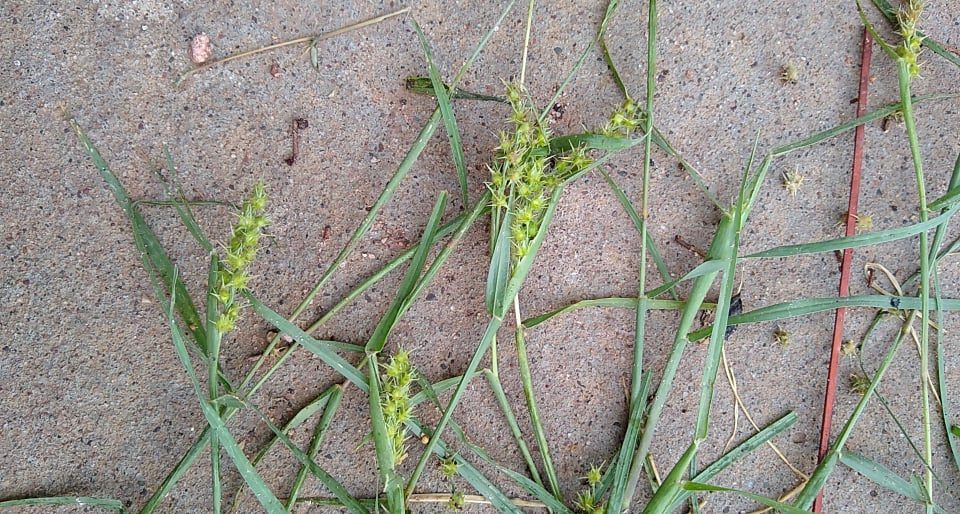
Buying a house in this particular part of Kentucky was part of that, putting me near the medical professionals I needed. Although I suppose part of that was luck, what with shopping during the ludicrous post-pandemic housing fever. Sure, we wanted to leave the Southwestern desert badly, aching to see something green and alive instead of dead and/or stabby. Seriously, even the grass has teeth there. See for yourself:
We craved land to frolic about and find peace in, and cleaner air and water. It fit our family and basic parameters, and was the first place we managed to get an offer in that was accepted. Nevertheless, I can’t help but feel it was meant to be.
Oddly enough, the doctor I ended up needing wasn’t the one I was seeking when we bought a house here. I ventured to KY with a referral to Dr. Brent Morris. What we didn’t know at the time, was that Dr. Morris wasn’t “the guy.” (His words) By another beautiful stroke of luck, the doctor he referred me to also happened to be located in Lexington, KY.
To my knowledge, Dr. Grantham happens to be the only practicing surgeon in the world that has the knowledge, skills, and expertise required to fix my shoulder the correct way. Secondly, he is the only physician (to my knowledge) who partners with a physical therapy clinic familiar with the intricacies of this condition, and how to rehab it properly.
All of this combined is simply too much for me to accept as mere coincidence. Though I do not consider myself to be a superstitious person, I can’t help believing this is fate. I cannot simply dismiss such a mountain of proof. When all of these pieces suddenly and effortlessly fell into place, it became crystal clear to me why I am here.
I am here in this part of Kentucky to get my shoulder fixed properly, by the right expert hands, so I can finally move on with my life. I have the best physical therapist for the job to guide me through recovery. Pain be damned, I am happy beyond measure, thrilled to every fiber of my being, to be unstuck.
Photo by Engin Akyurt, Edited by Jen H @musecalmind.com
Part 2: Game Time
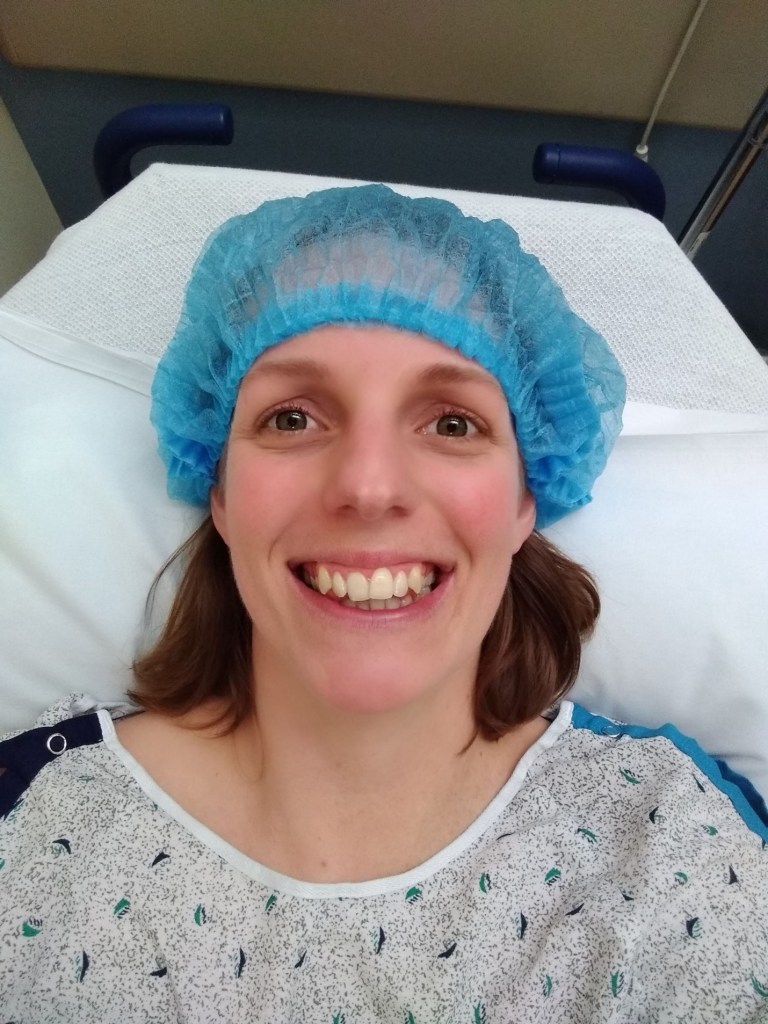
My pre-op nurse Jennifer was truly amazing! She explained everything so well, in so much detail, that I hardly had any questions. She took great care of me, including comic relief! She kept calling the blue hat I had to put on my “party hat,” and calling the sedative medications the “I don’t care” meds. To top it off, Nurse Jennifer thoughtfully asked if there is anything that makes my PTSD worse.
Me in my “party hat” getting prepped for surgery! Edit: No, I had not yet received my “I don’t care” meds yet, I’m just weird. And admittedly, not very photogenic, LOL.
If I’m not mistaken, I don’t recall ever having a nurse ask me that before surgery or any other outpatient procedure. It was one of a multitude of things she did that put me at ease. Her caring bedside manner let me know that I was in good hands, exactly where I needed to be, and reinforced my intuition that this is the right thing for me to do. To be honest, I liked her loads more than the anesthesiologist that came a bit later.
I found said anesthesiologist to be a bit strange. He spoke rapidly and imparted some weird vibes that certainly did not make me feel at ease, a bit off-putting actually. Having been through surgery prep before, instead of the comical, easygoing type that I’m used to seeing during this stage, this guy seemed like he was in a hurry and a little twitchy.
This anesthesiologist simply authorized the nurse to give me my other meds and do a nerve block. He said it was supposed to “kind of numb up the area, but it wouldn’t take away all of the pain.” So, that is precisely what I was expecting.
However, after about 20 minutes or so, I still didn’t feel numb. I could still feel my arm and shoulder/scapula area quite well, it just felt slightly heavy. I really started worrying when it still felt that way when I was being wheeled back toward the operating room.
Apparently, when my pre-op nurse went to check on that with him, he told her that it could take up to an hour to take effect. Naturally, my first thought was, “Well why the hell didn’t he come an hour before I was supposed to be wheeled back then?!” Sure enough, my concern was completely validated when I woke up and I was in A LOT of pain, like 8/9 out of 10. My shoulder felt as though that nerve block failed to take away hardly any of the pain.
Believe me when I say I’d much rather preferred my shoulder being completely numb that first day through the worst of the pain. I feel as though that should be standard procedure, but I’m not the anesthesiologist, I guess. I will be mentioning that to Doctor Grantham at my follow-up visit though.
Now, the post-op nurse…I did not like her so much. At the time, I had a tiny urge to tell her to F off, or swat her away with my good arm. I wanted to say to her “Ma’am, I know you have a job to do, but can we please slow down just a bit?” To me, it seemed as though she was being a bit short and trying to rush me out the door as quickly as possible, as if I didn’t just wake up from major surgery.
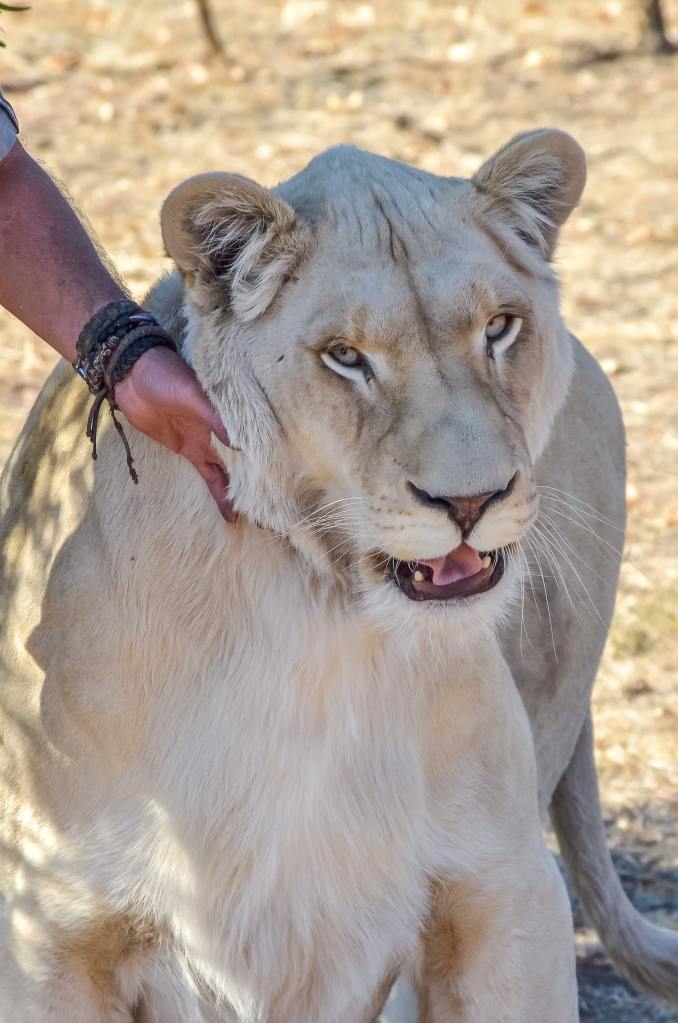
If this lioness could talk, I think she would say: “That’s quite enough touching, thanks. Kindly fuck off before I bite your hand off.” I feel you, lady, 100%. Photo by Mariska De Beer.
My husband didn’t see anything wrong with the way she was behaving towards me, then again, he wasn’t the one that just woke up from shoulder surgery exhausted, groggy, and in a level of pain they were not prepared for. She did, however, double my IV pain dose and give me an oral medication when I was finally able to articulate how bad my pain was.
It is worth mentioning that it wasn’t so much the grogginess that made it hard to speak. Rather, it was the amount of pain I was in that made it hard to communicate. If you have never been in that much pain, I sincerely hope you never are. Long of the short, it wasn’t all bad with her, but I was certainly glad to get out of there.
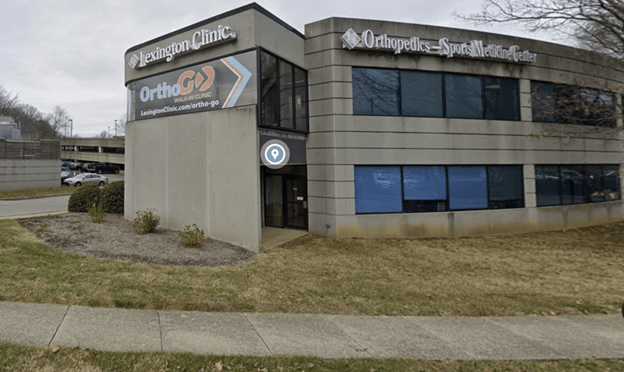
When I asked a nurse where we could get the cryotherapy cuff [1] from, I was disappointed to learn that we had to purchase it from Doctor Grantham’s main office, a separate building from the one that we were in for the surgery. It would have been nice to know that ahead of time, as this information was not documented in the pre-op folder I was given before my surgery.
We had just enough time to stop by his main office on the way home, only to be disappointed again that the representative was not there. I thought to myself “I’m glad I have a ton of ice packs at home.” They don’t quite cover the whole area that hurts, but it’s better than nothing. At this point, I thought “screw driving all the way back up there for a guy that may not be there again.” (It’s an hour and a half drive for us.)
In hindsight, that drive may have been worth it. I’ve no doubt that that item would have helped me tremendously at home those rough first few days. Anyway, during the trip home my husband filled me in on my doctor’s account of the mess in my shoulder, since I had still been asleep when he came by.
“When I got in there, it was exactly what I suspected: the trapezius and scapular muscles along the medial border of the scapula were almost completely detached. The top and bottom corners of the muscles were still attached, but the whole middle section was not. The parts that were still attached and all the surrounding muscles were having to work harder to compensate. It was preventing her from moving her shoulder and arm correctly. Those things combined were just irritating everything in the area and causing all of that pain.”
Hearing this report filled me with a mixed bag of feelings. I allowed myself to feel each of them and then let go, as I realized I had been holding it all on my shoulders for so long. I cried for a while, for very different reasons all at once. There came a sense of pity and grief, for my body that tried to heal something beyond natural human ability the best it could. Then there was sweet relief and validation, turns out it wasn’t all in my head.
The mind knows what the body has yet to understand.
Next came the closure and peace that comes from finally having answers and my shoulder finally being repaired. After a hot flash of bitter anger swept through me for it taking so long to get here, feeling cheated of the years of pain and limitations that I will never get back.
Finally, I felt a bright, warm rush of optimism and hope flooding through me, as if sunlight would glow through my skin, and emanate from my fingertips. I let joyful tears flow down my cheeks as I smiled at the bold blue sky. Relishing in the sunlight, I felt ready to bounce back, ready for my next chapter, brimming with opportunity. I think I would have gone dancing down the sidewalk, had it not been for the pain. Stay tuned for my journey through recovery.
[1] A cryotherapy cuff is an ice pack that is hooked up to a machine with cold water in it. It wraps completely around the shoulder, providing a constant flow of cold liquid coursing through it.
It feels surreal…like a lucid dream. There’s a part of my brain that refuses to accept that tomorrow, I will receive shoulder surgery that’s going to change my life. Although, that isn’t exactly surprising considering how long I’ve been waiting for it, and how many hoops I’ve been jumping through.
I feel as though chronic pain patients are surprised when someone offers them a new solution, or new information about their condition. For complicated or rare cases, the astonishment smarts when finally, AHA! That one specialty physician knows what the heck the actual problem is. I know I was certainly taken aback.
Nervous as I am, I feel lucky to have not needed major surgery until now. I can’t help ruminating on my surgeon’s delineation of what will take place during the surgery tomorrow. Admittedly, it’s a bit unnerving and nauseating to think about it happening to my own body.
This led me to search for other people on the internet who have already been where I am, who can reassure me that it’s totally going to be fine. However, as this condition is deemed rare, patient recovery stories regarding this condition are scarce. I found one person’s story from 11 years ago. Hers is the only story I found, despite my obsessive, fretful researching.
“In a world where you can choose to be anything, choose to be kind.”
She has been so helpful and kind in discussing this with me, reading about my fears, reassuring me, giving me the good, the bad, and the ugly. Words cannot express how grateful I am that she shared her story, and is willing to be my penpal, of sorts. It helps me feel less alone embarking on this endeavor. I often tell my children, “In a world where you can choose to be anything, choose to be kind. There is never enough good, kind people to go around.”
Speaking of good, kind people, I am glad to have found one in my doctor. This past Monday Dr. Grantham squeezed me in for a follow-up visit to discuss my concerns and questions about the surgery. I respect that he likes to answer such questions in person, and I am confident in his skills and knowledge. I feel incredibly blessed, knowing I am in the best, most capable hands I could be in for this condition and procedure.
Alas, I am also filled with joy and excitement that it’s finally my turn! It seems rather odd and a bit dark, that I feel joyous and excited about my shoulder getting flayed open, having holes drilled into my scapula, the muscles getting stitched back into the bone to “reattach them,” and getting sewn back up like a hole in a quilt.
Except the longer I suffer, the worse the pain and limitations become, and the more desperate I feel. The pain is unbearable, and began “setting off” my occipital neuralgia along with my migraines, within a few months of the acute injury in 2020.
If you’re not familiar with occipital neuralgia, it is intense nerve pain akin to receiving electric shocks to the back of your head that radiate in all directions. Dealing with all three different types of pain simultaneously over and over has truly been testing my mettle.
Throughout this journey, the more failed treatments I endured, the more doctors I saw that could not help me, the more frustrated I felt. I just kept thinking to myself, “There must be an answer. There must be someone who can help me. Something’s gotta give. Something has to change.”
As the days and months drug on with no solution in sight, I sorely missed working out, feeling strong and capable. I hungered for the freedom to crush whatever tasks I needed done without my husband’s help (mostly). I ached for my hobbies requiring the use of both arms such as archery and rifle shooting.
It feels as though the world was my oyster. This painful existence is a far cry from living. It feels like I have just been surviving, dragging myself through each day, relishing in each tiny bit of joy I could find, as it distracts me from the pain. I know that sounds melancholy, and probably melodramatic, but it is a relief to share my experience with raw honesty.
Nevertheless, I haven’t been able to exercise except for low impact cardio for three years. The days before I was in near-constant intense pain seem like a distant memory. The days when I felt free and able to accomplish just about anything when I set my mind to it.
“The body knows what the mind has yet to understand.”
Conversely, this is how I know I am more than ready to take this on tomorrow. I am so ready to move forward after feeling stuck for three years. I know this is the right thing to do for myself. My body has known for three years, maybe longer. Physical therapy failing to “magically fix” the problem confirmed that truth. Over the years, I have learned that the body knows what the mind has yet to understand.
I am as prepared as I feel I can be, thanks to my lovely Scottish penpal, the internet, and my own resourcefulness. I’ve got a mountain of pillows, all my post-op meds, plenty of comfy clothes, and more (metaphorical) balls than I ever knew I would need. Let’s do this.
Finally, in January 2023, after countless phone calls, I am informed that the referral has gone through to the clinic! The clinic calls me that same day to schedule, and I am overjoyed! I can’t believe that I’m finally going to see the expert Surgeon who can fix my shoulder. I met with Dr. Grantham for the first time in early March 2023.
My initial impression of Dr. G was similar to that of Dr. M. Knowledgeable, experienced, compassionate. To top it off, Dr. G was trained and mentored by the world leading expert on Scapular dyskinesis, Dr. William Ben Kibler. This guy, the second Dr. K, is the shoulder surgeon who “discovered” (or named this condition) and developed the treatment for it! In other words, I am in the best, most capable hands for my situation.
At this point, I cannot believe my luck, and I am beside myself with the blessings raining down on me after these three years of pain and suffering. My hard work and persistence are finally paying off. I am already impressed by the quality of care I am receiving, and the surgery hasn’t even happened yet.
Impressing me at this point in my life (and in this journey) is not an easy feat, as I’ve learned to be skeptical and discerning in pursuit of my medical care. I’m used to having to fight for my right to quality patient care and effective treatment. I’m used to advocating for myself when more often than not, it seems I am being brushed off. It was a splendid relief to be heard, the first time.
To my pleasant surprise, Dr. G and his team made everything seamless and easy! Dr. G accompanied by Dr. K, saw me for the initial visit, where they listened (GASP!) to my story. They performed the evaluation as gently as they could have and expressed sympathy that I had had to suffer so long and go through so much to get here.
I remember Dr. K specifically complimenting me on how strong I must be, to be able to withstand such pain for so long. It’s possible he was also referring to my mental fortitude as well. I stubbornly refused to give up and held on to hope no matter how many obstacles I met. I had faith that there was someone out there who could fix my shoulder.
After the exam, I was sent upstairs to meet with a physical therapist, John Lockhart, who goes by Will. The reason for this is they don’t rush into surgery there, and they value his opinion as a physical therapist. I think that is absolutely amazing and I have never seen anything like that before. After experiencing that thorough coordination of quality care, I can’t help but feel as though that should be the standard everywhere.
Anyhow, Will also took the time to listen to my story and was as gentle as he could be during his evaluation. Pointing to my AC joint, (which has been one of the main sources of my pain) he said,
“You can see here, it’s pulling your shoulder joint forward. And that shoulder pain is never going to stop until you get the scapular muscles repaired. Only then can we rehab your shoulder. You will have to relearn how to move your shoulder correctly. But until you get that surgery, you’re not going to get anywhere. Any conservative measures including PT, will be for naught.”
He then prescribed some prehab exercises to do before my surgery. Again, something I have never heard of before and thought highly of. Together, the three of them emphatically agreed that I definitely needed the surgery.
Doctor Kibler noted that I met ALL of the parameters for needing scapular muscle reattachment surgery. Dr. Grantham and Dr. Kibler thoroughly explained their reasoning, what the surgery entailed, and what the recovery would be like. Then they simply left the choice to me. No pressure, no condescending crap, just information and patience.
After discussing everything with Dr. Grantham, Dr. Kibler, and Will, and after I felt all my questions were answered, Will escorted me upstairs to schedule the surgery. Deep down, it feels as though I’ve known that I needed surgery all along. This experience confirmed that instinct.
I went out to my car afterwards, and just sat there in shock for a few moments before driving home. It felt like my head was spinning the entire rest of the day. These sensations were all good, however. I just couldn’t believe I had finally won.
I couldn’t fathom that it was actually happening, after feeling like I was running in place (or backwards) for 3 years, maybe more. Not to mention, I am still in awe that all those pieces came together in one day! I thought it would take at least a month to get through all of those steps.
I thought a great deal about that initial visit, reflecting on what the doctors had explained to me about scapular dyskinesis. Such as what it is, what causes it, and the long road to correcting it. I kept thinking back to that car accident many years ago. I couldn’t shake the feeling that it may have been the catalyst to all of this.
I remembered that during the accident, my upper body tensed up, as if bracing for the impact. I was white-knuckling the steering wheel with both hands, but maybe slightly more-so with my left. Most of the impact was to the front driver side of the car. It seems fitting that my left arm likely absorbed most of the shock…which is the shoulder that’s severely messed up now, needing surgery. CLICK. It fits.
After that accident, I carried on with my military career. Then the osteoarthritis. The several rounds of physical therapy that didn’t help. Next, despite staying physically fit most of those 9 years, the ensuing SLAP tear and the discovery of scapular muscle detachment. Maybe that day playing with my kids was the final straw, and this was a long time coming…9 years (up to that point) to be exact. CLICK. It fits.
With my surgery scheduled with the right surgeon, and my physical therapy connection already set, I felt I could finally let go. I felt a sense of peace and relief, that I hadn’t felt in a long time. I could relax and rest now. The fight was over. Now comes the repair, the healing, and new beginnings.
In the first chapter of my shoulder surgery chronicles, I am returning to where I reckon this mess began. There’s no way to know with absolute clarity and certainty how I ended up with scapular dyskinesis. However, the extensive research I have done on this condition, coupled with the conversations I have had with my medical team, leads me to believe that this is the most credible account. It is a story spanning 12 years, give or take.
Many years ago, I was living in Washington state. In the summer of 2011, I was in a motor vehicle accident, my first one to be exact. The first accident is often an awful one, and for some reason unbeknownst to me, it seems to occur when the person who is hit is doing everything correctly.
Picture this: you’re doing everything you could and should be doing to be a good driver and avoid accidents…wearing your seatbelt, no distractions, no speeding, driving as safely as possible, etcetera…that, is when chaos intervenes.
It could be an animal, a force of nature, or in my case, another human. This person, fallible and flawed as he was (as we all are), was apparently in a much bigger hurry to reach his destination that morning than I was. I mean who else drives 55 MPH entering a neighborhood, where the posted speed limit is 15 MPH, right? I’m betting it’s the same kind of person who would touch an electric fence on purpose.
Anyway, thanks to this reckless driver, my car was totaled. Apparently, my odd way of coping with that traumatic experience, and the correlating surge of adrenaline and anxiety, was to channel it into being irritated that he had spilled my coffee.
I remember feeling angry and devastated, as I had only owned that car for a few months. It was my first car, bought with my own hard-earned cash. There’s truly nothing like your first car. It symbolizes concepts so much deeper than simply a mode of transportation. That car was my first true sense of freedom and independence as an adult. I was doing everything correctly, by the book. And it still didn’t fucking matter.
Suddenly, I knew what my grim high school photography teacher meant by “Life’s a bitch, and then you die.” The first part is about the bullcrap that life throws your way when you don’t deserve it, and the second part is about life being short and being glad you’re not dead yet. Well, I thought, at least I still had that.
At any rate, I remember that accident causing whiplash, and my upper body feeling sore. Being young, dumb, and stubborn, I didn’t think much of it at the time. I caught a ride with a coworker and went off to work. However, it wasn’t long before I realized more damage had been done than I originally thought.
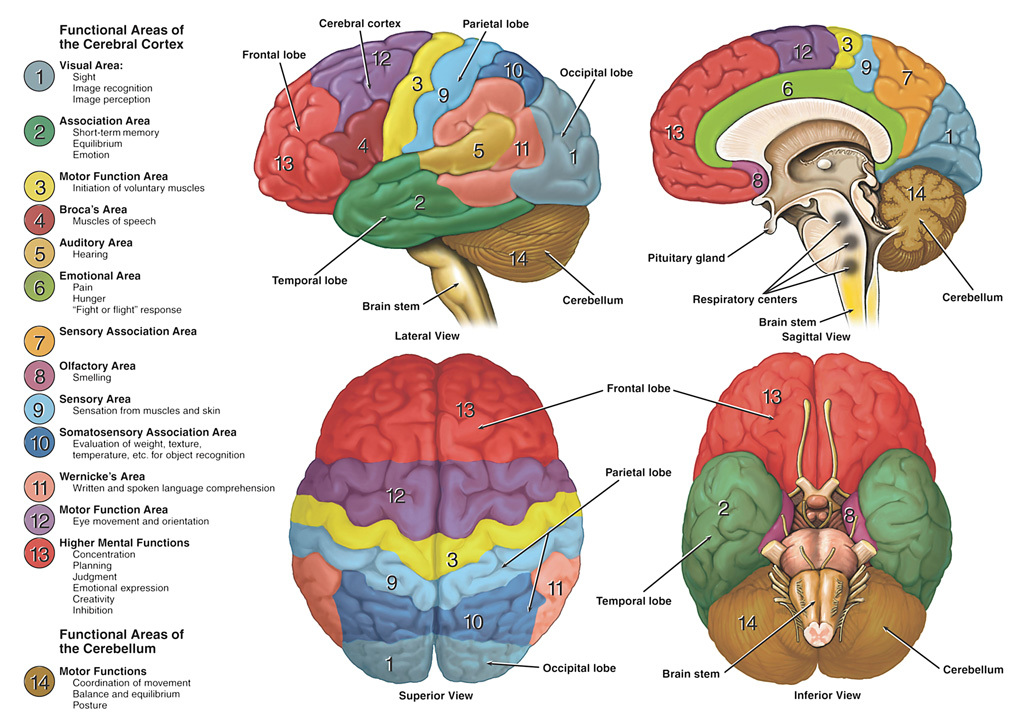
When I suddenly started having problems with my balance, equilibrium or inner ear balance, memory, concentration, mood, sleep, and even trouble keeping my eyes open, I knew something was seriously wrong.
This brain diagram helped clue me in to what the heck was happening to me. Turns out, I had a mild traumatic brain injury. This picture also helped me understand exactly which parts of my brain were damaged in the accident.
A short time later, during some mandatory training, I learned that you don’t have to get hit in the head or be near a blast to have a traumatic brain injury. Whiplash, like that from a motor vehicle accident, is all it takes. That’s not to say it will happen to everyone, every time. I’m not a doctor. But just learning that it can happen that way, coupled with my symptoms matching, CLICK. I knew before I was officially diagnosed.
Sometime after I recovered from the worst of my mild TBI symptoms, I started noticing pain in my shoulders. As I was medically retiring a year and a half or so later, I was told that it was osteoarthritis, or wear and tear from military service. It seemed like a plausible diagnosis.
In an attempt to cope with the ongoing pain after I left military service, I did a couple of rounds of physical therapy, to no avail. At that point, I just accepted I would have to learn to live with it and work around the pain. That I did, including modifying my exercise routine to accommodate it.
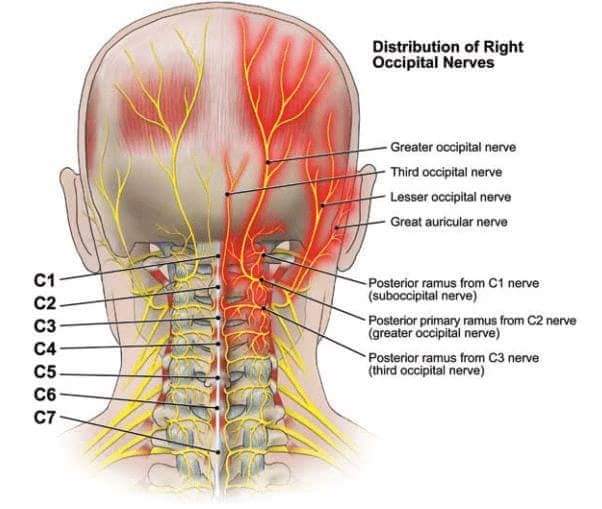
That seemed to work well until late 2015, when I suddenly felt as though someone was tasering me in the back of my head. It is the most painful sensation I have ever experienced, an electric shock-like pain originating from the base of my skull, radiating up into my scalp and my face every couple of seconds.
My new diagnosis was occipital neuralgia. This told me I likely have damage to my cervical spine, as the occipital nerves extend down into discs C1-C4. I wouldn’t find out exactly what kind of damage (besides nerve damage) until a few years later.
Now it’s about 9 years since the car accident, in 2020. I am swinging on an overhead horizontal bar, playing with my kids. We were pretending to be monkeys. No lifting or excessive strain, just swinging. Then I heard and felt a “pop,” and pain so intense I thought I broke a bone or dislocated my shoulder. I headed to the ER, with the results being negative for both of those. My primary care doc sends me to physical therapy, which I attended for 8 weeks.
The result was an increase of pain, instead of a decrease. Big surprise there. I’m sure quite a few people in the medical community would be shocked to learn that physical therapy doesn’t fix everything. About 9 months after the acute injury, I was finally sent to obtain an MRI, which showed a healing SLAP tear or a “superior labral tear from anterior to posterior” tear.
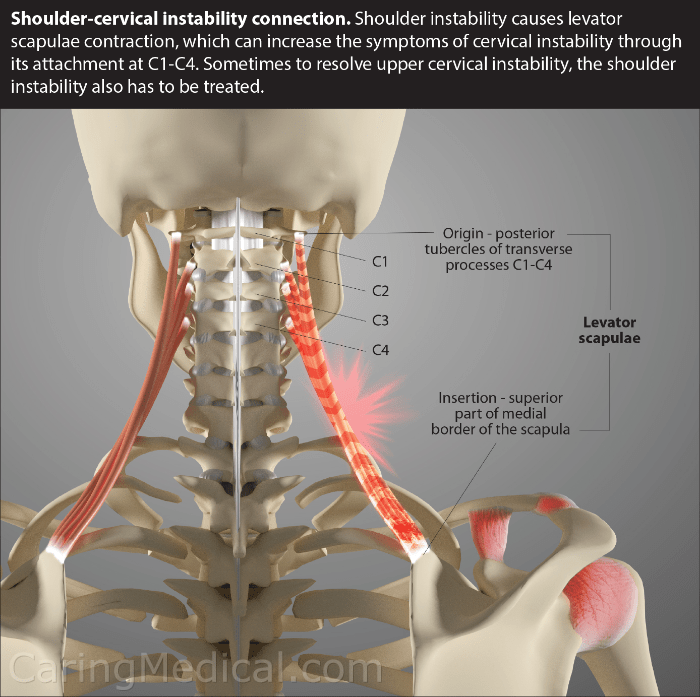
When I saw the first orthopedic surgeon, the Dr. Kelly Kirkpatrick, we did oral steroids, cervical spine imaging, and an arthrogram of my shoulder. The cervical spine MRI showed damage that was previously missed. I thought aloud at the appointment, “Wow, I wonder how long that’s been there.” Although problems with the cervical spine and shoulder can be linked, as seen in the image below, it still did not fully explain my situation.
In the end, Dr. K concluded that my cervical spine was not the source of my shoulder pain, and if the SLAP tear was all that was wrong, it should have healed by now with conservative measures. Still, I continued to have intermittent intense pain, and constant aching in between those episodes.
My medical team at that time didn’t gain any further clarity on repeat imaging. Yet my pain continued to worsen any time I used that arm, even for things as light as vacuuming. Eventually, just sleeping on that side was enough to trigger intense pain, two years after that injury. Which, in turn, made getting adequate rest absolute hell.
The last conservative treatment option attempted was a steroid injection. I knew deep down it wouldn’t fix it, but I said what the hell. Better that than rushing into surgery when they aren’t even certain what to fix. When it didn’t “magically fix” my pain, we discussed surgery.
By this point, I didn’t feel afraid of going under the knife, I was simply tired of being in so much pain. This Dr. K suggested a procedure called bicep tenodesis. I chose to research the procedure first to make the most informed decision. I was also about to move out of state, so it just wasn’t possible at the time.
I am so glad that I didn’t agree to that procedure, and that the timeline didn’t work out, because it wouldn’t have fixed the problem. To be honest, I don’t think they had a clear idea as to exactly what the problem was. Not that they didn’t try, they just didn’t have the right expertise.
That is what I found in KY, the land of phenomenal shoulder surgeons, which will be discussed in Chapter Two. Stay tuned, as I cram writing in between physical therapy, family life, and fighting my daily mental war.
Dear reader, thank you for being here. I hope you find my story insightful and inspiring. If you have any questions about my journey in the course of navigating your own or helping a loved one with theirs, please feel free to ask!
















 Musecal Mind